

Record voter turnout leaves both ruling right-wing bloc and opposition without clear 61-seat path, as Arab parties secure critical gains
JERUSALEM — Oct. 28, 2026 : Israel is heading toward another protracted political deadlock after partial parliamentary election results showed Prime Minister Benjamin Netanyahu’s right-wing bloc ahead of the opposition but short of the 61-seat majority required to form a government.
With more than 70 percent of ballot boxes counted by Wednesday morning, provisional figures from the Central Elections Committee placed the bloc loyal to Netanyahu at 54 to 55 seats in the 120-seat Knesset. The main opposition alliance, spearheaded by former military chief of staff Gadi Eisenkot, followed with 48 to 49 seats, while Arab-led parties surged to between 16 and 18 seats.
The national ballot—the first parliamentary vote since the Oct. 7, 2023 attacks and the wider regional wars that followed—drew an official turnout of 77.7 percent. That figure represents the highest civic participation in Israeli legislative elections since 1999.



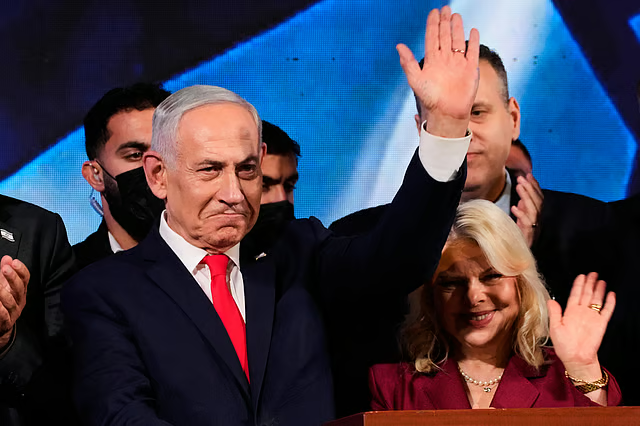
Despite neither faction securing a definitive path to power, both leaders appeared before supporters overnight to claim a mandate to govern.
Addressing Likud party faithful at a Jerusalem convention center shortly after 3 a.m. local time, the 77-year-old Netanyahu stopped short of a premature victory declaration. Instead, he called for unity among nationalist factions, asserting that the “Jewish and Zionist majority must unite” to deliver a stable, right-wing administration. Netanyahu, who has held the premiership for a cumulative 19 years across three decades, faces intense scrutiny over the intelligence failures preceding the Gaza campaign, as well as ongoing domestic corruption proceedings.

In Tel Aviv, Eisenkot struck a defiant tone, insisting that the electorate had explicitly rejected the current government.
“The public has voted for change,” Eisenkot told cheering crowds. “A worthy leader would accept the people’s vote of no confidence and announce his retirement from political life today.”
The 66-year-old retired general, leading his centrist Yashar faction alongside established opposition partners, cautioned the prime minister against geopolitical maneuvering during the transition period. “Netanyahu, don’t you dare use Israel’s security for your political needs,” Eisenkot said, labeling his rival an unmandated caretaker.
The electoral mathematics leave both camps constrained by rigid political red lines. While arithmetic allows an opposition-led majority if combined with Arab parties such as Ra’am and Hadash-Ta’al, Eisenkot affirmed throughout the campaign that he would not incorporate Arab factions into a formal governing cabinet. Netanyahu has maintained an identical stance, arguing that reliance on non-Zionist Arab lawmakers undermines executive legitimacy.
Left-wing voices within the opposition have begun pushing back against that exclusion. The Democrats leader Yair Golan urged Eisenkot on Wednesday to build an alliance with Arab parliamentarians, arguing that a collective anti-Netanyahu tally of roughly 65 seats represents the genuine democratic will of the country.
Arab voters turned out in elevated numbers across northern and central districts, countering rhetoric from right-wing figures who warned their participation would dilute the country’s nationalist character. A non-coalition confidence-and-supply agreement with Arab factions remains an outside option for Eisenkot, though right-leaning elements within his own coalition view that prospect with skepticism.
Under Israeli electoral law, several minor lists are hovering dangerously close to the 3.25 percent threshold required to gain Knesset representation. Whether these fringe factions cross the threshold as the remainder of the civilian vote and military personnel ballots are processed could shift the final bloc allocations by one or two decisive seats.
The formal ballot count, including overseas diplomatic tallies and active-duty military personnel voting at defense installations, will proceed through Thursday, with certified tallies expected before the weekend. Once the Central Elections Committee submits the confirmed certification, President Isaac Herzog will conduct statutory consultations with all faction leaders before tasking one lawmaker with assembling a viable governing majority. That designated candidate will have an initial 28-day window to negotiate a coalition agreement.
If neither Netanyahu nor Eisenkot can construct a stable coalition, Israel could face months under a caretaker administration, raising the prospect of another snap general election.