

Vijay-led administration rolls out heavy social spending, targeting students, brides, and pregnant women while raising fresh concerns on the Mullaperiyar dam dispute.
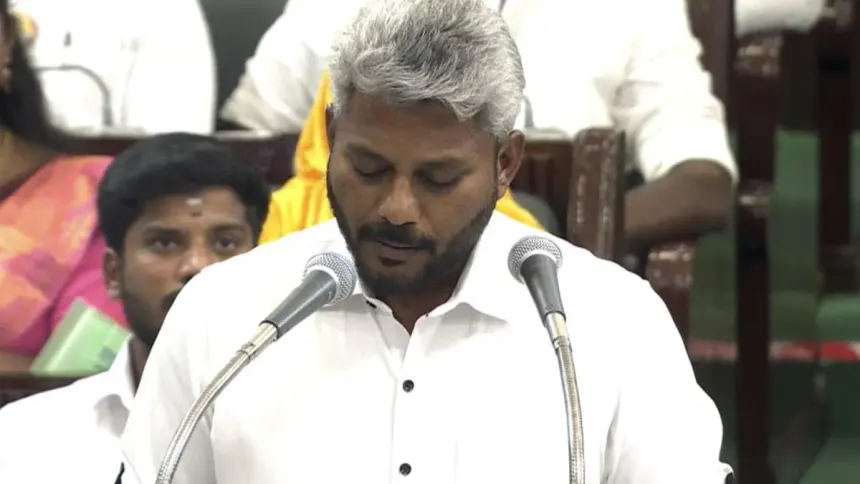
CHENNAI : In a high-stakes debut to its fiscal agenda, the newly elected Tamil Nadu government led by Chief Minister Vijay unveiled its first annual budget on Wednesday, introducing an array of high-decibel welfare schemes for students, young women, and healthcare beneficiaries while signalling a tough diplomatic stance on regional water sharing.
The financial roadmap, presented in the state assembly, places targeted social support at the center of the administration’s policy framework. Key among the populist measures is the distribution of free laptops to college students, a revival and expansion of popular youth incentive programs aimed at bridging the digital divide in higher education.



To strengthen public education enrollment and rural mobility, the government announced free bicycles for all Class 11 students across state and state-aided schools. The administration is also targeting maternal and child health infrastructure, promising dedicated care centers for pregnant women in every district alongside a scheme providing a one-gram gold coin for newborns delivered in state-run government hospitals.
In a move aimed at traditional social welfare, the budget allocates dedicated funding to present a sovereign of gold (eight grams) and a silk saree to newlywed brides from economically weaker backgrounds.
Beyond domestic social spending, the budget address touched upon a critical interstate dispute, asserting that the Tamil Nadu government will initiate steps to raise the water level of the Mullaperiyar dam. The reservoir, located in Kerala but operated by Tamil Nadu, remains a longstanding point of political and ecological friction between the two neighboring states.
The financial package reflects the political imperatives of Vijay’s party, TVK (Tamilaga Vettri Kazhagam), following its recent electoral entry. Party strategists view the heavy focus on family welfare, education, and health as a necessary foundation to consolidate popular support while maintaining regional economic priorities.
State finance officials stated during the presentation that detailed implementation guidelines, eligibility criteria, and budgetary outlays for each scheme would be notified through separate executive orders in the coming weeks. Opposition benches, while taking note of the extensive direct-benefit announcements, raised immediate questions regarding fiscal discipline and the long-term debt burden on the state treasury.