


European regulators advise carriers to avoid Arabian Gulf waters while major international airlines prolong flight suspensions to Dubai and the wider region.
DUBAI, Sept. 1, 2026:Commercial aviation across the Arabian Gulf faces fresh operational hurdles this week after European aviation authorities extended airspace risk advisories through September 30, prompting widespread schedule adjustments, route diversions, and selected flight cancellations across UAE hubs.
The European Union Aviation Safety Agency (EASA) renewed its Conflict Zone Information Bulletin (CZIB) on Monday, cautioning international carriers against operating over Arabian Gulf waters at all flight levels. The updated directive applies to the Flight Information Regions (FIRs) of the Emirates, Bahrain, Kuwait, Doha, and Muscat, permitting overflights only when strictly necessary for departures and arrivals at local airports.
The regulatory move follows renewed military strikes between the United States and Iran around the Strait of Hormuz and regional bases, disrupting commercial routes at a time when UAE hubs are managing heavy passenger traffic from returning summer holidaymakers.


Airlines operating out of Dubai, Abu Dhabi, and Sharjah have adjusted daily timetables to navigate airspace restrictions, leading to selective cancellations and staggered departures.

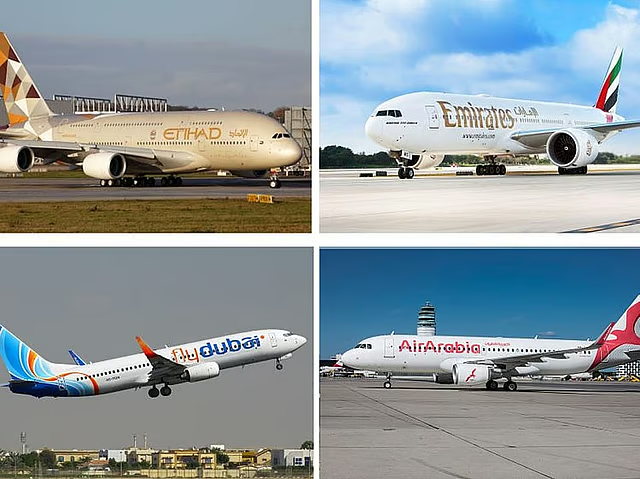
Air Arabia cancelled several Gulf services on Tuesday, including flight G9068 and G9124 between Sharjah and Kuwait, G9107 to Bahrain, and Abu Dhabi-Kuwait service 3L020.
Emirates reported cancellations on its Nairobi route (EK717 and EK719), while maintaining scheduled regional departures to Bahrain and Kuwait. Long-haul departures from Dubai to destinations including Newark, Glasgow, São Paulo, Bali, Guangzhou, and Antananarivo experienced operational delays.

Etihad Airways maintained scheduled services from Abu Dhabi to Kuwait and Bahrain, though select regional rotations logged delays. flydubai urged passengers departing Dubai International Airport to arrive at least four hours prior to departure, utilize online check-in facilities, and track live flight monitors.
Independent disruptions also affected regional and international operators at Dubai. Departures cancelled on Tuesday included Kenya Airways flight KQ311 to Nairobi, flynas flight XY502 to Jeddah, Qeshm Airlines flight KQ2224 to Lar, and Iraqi Airways flight IA120 to Kirkuk. Multiple outbound services operated by SpiceJet and Airblue registered delays.
Global carriers have implemented extended service halts into the Gulf:
- British Airways: Suspended flights to Dubai, Amman, Bahrain, and Tel Aviv through October 25.
- Singapore Airlines: Halted Dubai routes through October 24.
- Philippine Airlines: Paused Dubai operations until October 2.
- Air Canada: Extended Dubai flight suspensions into mid-January 2027.
- Lufthansa and SWISS: Suspended Dubai services through September 13.
- KLM: Halted flights to Dubai, Riyadh, and Dammam through September 6.
- Turkish Airlines: Resumed flights to Abu Dhabi and Dubai, while maintaining suspensions to Iranian destinations.
Aviation authorities and UAE carriers advise all passengers to verify individual flight statuses before travelling to airports, confirm that contact details are correctly linked to reservations for automated alerts, and allocate extra time for airport processing.