


Tehran insists it remains open to talks while rejecting US pressure; shipping monitors report surge in maritime attacks near Strait of Hormuz.
RIYADH / WASHINGTON — October 16, 2026 : Saudi air defence units intercepted a barrage of ballistic missiles and armed drones launched toward Riyadh and several border provinces, military authorities announced, as escalating regional hostilities prompted Washington and Tehran to exchange warnings over the limits of direct military confrontation.
Saudi air defence units intercepted a barrage of ballistic missiles and armed drones launched toward Riyadh and several border provinces, military authorities announced, as escalating regional hostilities prompted Washington and Tehran to exchange warnings over the limits of direct military confrontation.
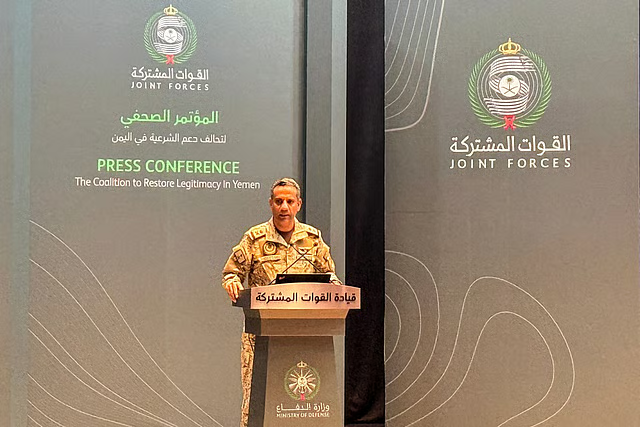
Coalition spokesperson Brig. Gen. Turki Al-Malki confirmed the interceptions during a briefing in the Saudi capital, stating that air defence batteries neutralized multiple aerial projectiles before reaching populated population centres and critical infrastructure. The Saudi government commended the United Nations Security Council for its formal condemnation of cross-border strikes originating from Yemen, underscoring that the Kingdom retains full legal rights to protect its territorial integrity, energy assets, and civilian population under international law.




The renewed cross-border fire coincides with stark diplomatic signaling from Washington. US President Donald Trump stated that American operational plans exclude both the deployment of ground forces and the use of nuclear weapons in any confrontation with Iran, characterizing such measures as unnecessary to achieve deterrent objectives.
Iranian President Masoud Pezeshkian responded from Tehran by declaring that the Islamic Republic will not capitulate to international coercion or economic penalties. Pezeshkian reiterated that Tehran’s official military doctrine does not encompass the pursuit of nuclear weapons, asserting that the country remains prepared to engage in diplomatic negotiations provided national sovereignty and existing international frameworks are respected.
Regional waters witnessed a corresponding spike in maritime security incidents. The United Kingdom Maritime Trade Operations (UKMTO) documented 12 attacks on merchant shipping over a seven-day period across Gulf waterways. Ten incidents occurred in and around the strategic Strait of Hormuz, resulting in the total loss of one commercial vessel.
Separately, Iranian naval units reported that an oil tanker caught fire in the Sea of Oman after allegedly failing to comply with navigation advisories and maritime restrictions. Shipping operators and international naval task forces patrolling the corridor have heightened alert statuses, warning merchant vessels to maintain maximum vigilance and exercise caution while navigating Gulf shipping lanes.