
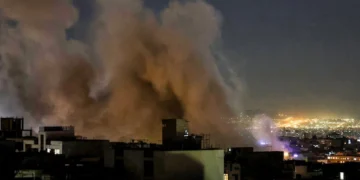




































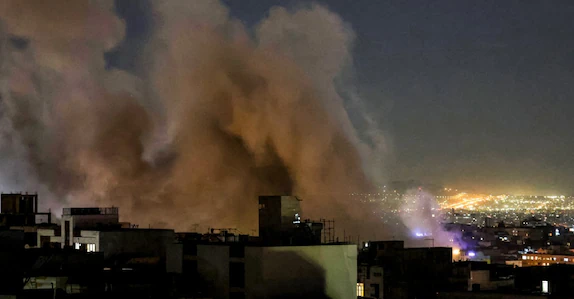
Tehran, March 2, 2026 : Large-scale destruction in several Iranian cities following recent missile strikes has intensified scrutiny over Tehran’s air defence capabilities, particularly the Chinese-made HQ-9B surface-to-air missile system.

The system, recently acquired from China, reportedly failed to effectively intercept incoming missiles during coordinated air operations. Defence analysts say the performance has raised serious questions about the reliability of the HQ-9B in high-intensity combat scenarios.
Notably, military experts also point to earlier concerns surrounding the system’s effectiveness during India’s “Operation Sindoor,” where similar defence technology allegedly struggled to protect strategic targets in Pakistan.
Deployed Around Key Iranian Sites
Iran reportedly procured the HQ-9B under an “oil-for-arms” arrangement amid tightening regional tensions. The system was deployed around critical facilities including the Natanz nuclear complex and Isfahan airbase.
However, the latest missile strikes by joint U.S.-Israeli forces appear to have penetrated these defensive layers, leading to visible damage and raising broader concerns over the system’s operational readiness and real-world combat effectiveness.
Experts Question Combat Reliability
Defence analysts note that air defence systems can be overwhelmed by coordinated multi-layered attacks involving cruise missiles, ballistic missiles, and drones. Whether the HQ-9B failed due to technical limitations, saturation tactics, or operational factors remains unclear.
Nevertheless, the incident has sparked renewed debate over the performance of Chinese defence exports and their effectiveness compared to Western and Russian systems.
As tensions escalate across the Middle East, the performance of advanced air defence systems is likely to remain under intense global scrutiny.