

Joint ministerial meeting with Russia in Manama calls for strict adherence to international resolutions and regional sovereignty
MANAMA — Gulf Cooperation Council foreign ministers have called on the international community to counter Iranian diplomatic efforts aimed at securing a favorable United Nations Security Council resolution, stressing that regional security hinges on absolute respect for state sovereignty and international law.
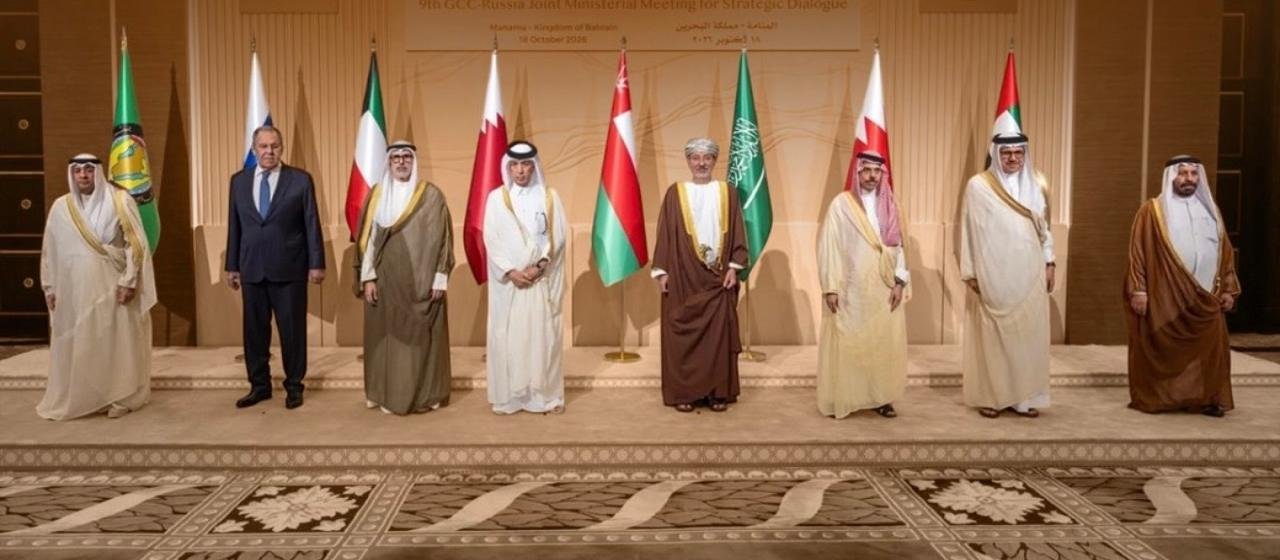
The position was formalized during the GCC-Russia Joint Ministerial Strategic Dialogue held in the Bahraini capital, Manama. Chaired by Bahrain’s Minister of Foreign Affairs, Dr. Abdullatif bin Rashid Al Zayani, the high-level meeting brought together senior diplomats to evaluate escalating Middle East tensions and align multilateral diplomatic efforts.
Council ministers urged United Nations member states to resist Tehran’s push at the Security Council, warning that unilateral diplomatic maneuvers undermine collective stability across the Arabian Gulf. Discussions focused heavily on enforcing existing international mandates, with the ministerial bloc reaffirming the necessity of full compliance with relevant UN Security Council resolutions, including Resolution 2817.


Dr. Al Zayani emphasized that sustainable regional peace requires non-interference in internal affairs, strict adherence to the UN Charter, and mutual respect for territorial integrity. The ministers stressed that international rules-based governance cannot be applied selectively when addressing disputes in the Gulf and broader West Asia.


The joint session with Russian officials served as an avenue for Gulf states to lobby key veto-wielding members of the Security Council. Diplomatic sources indicated that the GCC delegation pressed Moscow to support measures preventing circumvention of established maritime, security, and non-proliferation protocols.
Gulf capitals continue to express concern over proxy engagements, ballistic missile development, and diplomatic lobbying by Tehran in multilateral arenas. GCC foreign ministers reiterated that dialogue remains the preferred route to de-escalation, provided regional security concerns are resolved through binding, verifiable frameworks rather than unilateral political posturing.