

Flight disruptions widen and maritime rerouting mounts as regional diplomatic overtures in New York fail to break the strategic shipping corridor deadlock.
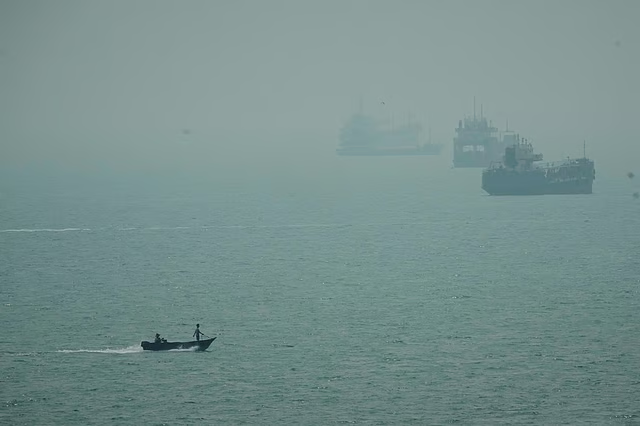
DUBAI, Sept. 26 — Hopes for an immediate reopening of the Strait of Hormuz faded Saturday after Washington turned down a seven-day reciprocal de-escalation plan presented by Tehran, leaving commercial shipping paralyzed through the chokepoint and triggering cascading flight cancellations and trade safeguards across the United Arab Emirates and the wider Persian Gulf.
Hopes for an immediate reopening of the Strait of Hormuz faded Saturday after Washington turned down a seven-day reciprocal de-escalation plan presented by Tehran, leaving commercial shipping paralyzed through the chokepoint and triggering cascading flight cancellations and trade safeguards across the United Arab Emirates and the wider Persian Gulf.
The diplomatic impasse materialized as Iranian Foreign Minister Abbas Araghchi delivered a phased proposal to American negotiators through Qatari mediators. Under the initiative, Tehran offered to restore unimpeded maritime passage through the strategic waterway on the seventh day. In exchange, the framework called for an immediate regional cessation of hostilities stretching into Lebanon, an end to the American naval blockade outside Iranian ports, the unfreezing of at least $12 billion in sanctioned assets, the removal of oil embargoes, and a structured return to negotiations over Iran’s nuclear program.



United States officials confirmed President Donald Trump rejected the offer, stating the administration would not tie maritime freedom of navigation to wide-ranging sanctions relief and strategic concessions. US Central Command reiterated its enforcement operations in regional waters, confirming naval assets had already intercepted and redirected 122 commercial vessels navigating near the maritime blockade perimeter.
The continued standoff reverberated swiftly across the Arabian Peninsula’s transit hubs. While the UAE General Civil Aviation Authority confirmed local hubs—including Dubai International (DXB) and Zayed International Airport in Abu Dhabi—remain open and operational, civil aviation authorities have barred Iranian carriers from operating to and from Emirati airports until further notice.
International carriers have responded by curbing operations or withdrawing capacity from regional corridors. Air France suspended all Dubai frequencies through Oct. 13, while KLM, Singapore Airlines, ITA Airways, SWISS, and Eurowings paused scheduled services until at least Oct. 24. Low-cost operator Wizz Air pushed its projected Dubai resumption to Oct. 25 and Abu Dhabi to Oct. 27, while Air Canada pulled its direct Dubai schedule off the boards through mid-January 2027. Turkish Airlines has restored passenger operations into Dubai and Abu Dhabi, though its connections to Tehran remain grounded. Iraq’s civil aviation authorities mirrored the restrictions, with Najaf International Airport halting Iranian air routes following fresh international measures.

Regional defense systems remain on high readiness. In Saudi Arabia, coalition air defenses intercepted two armed aerial drones over open terrain outside Riyadh, followed hours later by the destruction of a ballistic missile fired toward Khamis Mushait. Against this backdrop, Saudi Defence Minister Prince Khalid bin Salman conferred in Riyadh with Pakistan’s Chief of Army Staff, Field Marshal Asim Munir, reviewing mutual security commitments under the Mecca Joint Defence Agreement to defend critical economic infrastructure.
Diplomats at the UN General Assembly in New York attempted backchannel mediation to contain commercial fallout. Omani Foreign Minister Badr Albusaidi held closed-door discussions with Araghchi to establish temporary safety lanes for merchant vessels and tankers, stressing that unhindered passage through Hormuz remains imperative to stave off global energy shockwaves.
Parallel to the Hormuz impasse, Iranian President Masoud Pezeshkian signaled potential flexibility on oversight during an interview with CBS News, indicating Tehran remains open to permitting inspectors from the International Atomic Energy Agency (IAEA) back into Iranian facilities if structured within comprehensive negotiations.
For Gulf businesses and residents, the economic ramifications hinge on the standoff’s duration. The Strait of Hormuz accounts for approximately a fifth of global petroleum transit. Prolonged closure threatens to push vessel war-risk insurance premiums higher, lift container freight benchmarks, and feed through to retail import prices and local fuel adjustments. UAE aviation and trade authorities continue to advise travelers to verify flight bookings directly with air carriers before commuting to terminals.