

A six-member mission from the UN nuclear watchdog concludes a nine-day review, finding safety protocols and off-site power recovery operated effectively.
ABU DHABI — October 20, 2026 : The International Atomic Energy Agency concluded a specialized advisory mission to the United Arab Emirates on Tuesday, formally validating the country’s emergency preparedness and operational safeguards following a drone strike near the Barakah Nuclear Power Plant earlier this year.
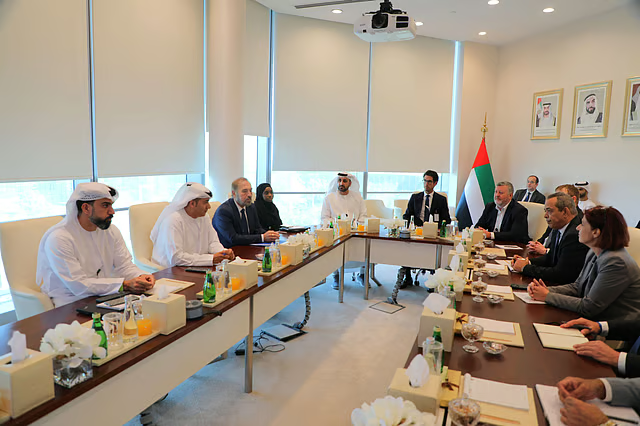
The assessment followed an eight-day on-site review conducted between Oct. 12 and Oct. 20 at the request of the UAE government. The six-member technical team evaluated plant safeguards, regulatory response frameworks, and operational continuity at the four-reactor facility in Abu Dhabi’s Al Dhafra region.
The watchdog concluded that plant operators and national authorities responded appropriately to a loss of off-site power triggered on May 17, when a drone struck an electrical generator situated outside the facility’s inner perimeter. The resulting blaze was brought under control without causing injuries, equipment damage to the reactors, or any elevation in baseline radiation levels.


Effective action was taken to maintain safety throughout the event, the agency said, citing rapid domestic and international notifications, the prompt implementation of emergency procedures, and transparent public communication.

The mission stemmed from consultations initiated during IAEA Director General Rafael Mariano Grossi’s visit to the UAE in June. Grossi had stressed the imperative under international humanitarian law of safeguarding civilian nuclear installations against military targeting amid broader regional tensions.
During the review, inspectors examined response mechanisms against the IAEA’s Seven Indispensable Pillars for Nuclear Safety and Security. Working alongside senior specialists from the Federal Authority for Nuclear Regulation and the Emirates Nuclear Energy Corporation, the team cataloged regulatory oversight practices, staff coordination, and structural defenses.

The team commended the UAE for embedding robust emergency procedures into its operational doctrine while maintaining tight regulatory oversight. They also framed recommendations for the wider global nuclear industry, focusing on reinforcing the resilience of critical auxiliary power grids, updating contingency playbooks, and harmonizing coordination among civil defense, operators, and regulators during hybrid security challenges.
The UAE established its nuclear emergency framework alongside the development of the Barakah facility, which completed commercial launch across all four APR-1400 units earlier in 2024. The network includes interconnected national emergency operations centers, mandatory multi-agency training cycles, and international reporting systems designed to address radiological emergencies immediately. In 2021, the country hosted ConvEx-3, the IAEA’s highest-level emergency drill involving 75 member states and 12 international organizations.
Barakah supplies approximately 25% of the UAE’s electricity demand. Operational data confirmed that all four generating units have continued operating normally under continuous regulatory monitoring by FANR.