


Prime Minister Narendra Modi to flag off the zero-emission indigenous train on the Jind-Sonipat route, marking a new milestone in green transportation
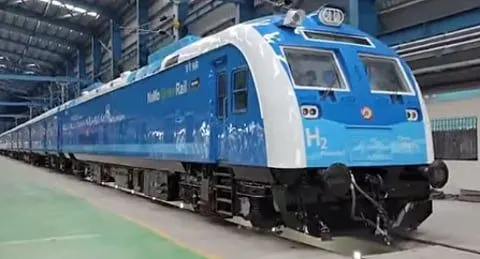
JIND, HARYANA – July 17, 2026:India will officially enter the global elite of green rail transportation today as Prime Minister Narendra Modi flags off the nation’s first indigenous hydrogen-powered train from the Jind railway station. Operating on the 89-kilometre Jind-Sonipat section of the Northern Railway, the launch marks a major shift towards clean energy, eliminating traditional tailpipe emissions through advanced fuel cell technology.

The 10-coach passenger trainset represents the greenest form of rail propulsion developed in the country. Engineered completely in India under the ‘Atmanirbhar Bharat’ initiative, the locomotive utilizes hydrogen fuel cells to generate electricity on board by combining hydrogen with atmospheric oxygen. The chemical reaction leaves behind only water vapour and heat as byproducts, completely eliminating dependency on conventional diesel traction or continuous overhead electric cables.


Technological Edge and Indigenous Infrastructure
Developed under the technical guidelines of the Research, Design & Standards Organisation (RDSO), the new trainset is equipped with a 3,200 horsepower propulsion system, positioning it as one of the most powerful hydrogen passenger configurations in operation globally. The train operates at a service speed of 75 kilometres per hour, with a maximum design capability of 110 kilometres per hour.
To support the daily operations of this zero-emission fleet, Indian Railways has established the country’s largest dedicated hydrogen storage and refuelling facility at Jind. The indigenous terminal is capable of storing up to 3,000 kilograms of compressed hydrogen at any given time. The Petroleum and Explosives Safety Organisation (PESO) has already issued the mandatory operational licences for the safe containment and dispensing of the high-energy gas at the site.
Advanced Safety Systems
Addressing the complexities of managing compressed hydrogen, the train features a multi-layered safety grid designed to detect the earliest indicators of structural stress or leaks.

- Leak Detection: Automated sensors constantly monitor the integrity of the storage cylinders.
- Thermal Scanners: Built-in heat, smoke, and flame detectors trigger automatic shutdown mechanisms if an anomaly arises.
- International Certification: The entire ecosystem has been audited and certified by Germany’s TÜV SÜD, ensuring alignment with global ISO and National Fire Protection Association (NFPA) standards.
Global Standing and Regional Impact
With the commencement of this pilot service, India joins a highly exclusive cohort of nations exploring or actively running hydrogen-powered rail frameworks, including Germany, China, Japan, and the United States. The project will serve as a primary testing bed for Indian Railways as it evaluates broader applications of clean-energy corridors across its expansive nationwide network.
Local communities in Jind have welcomed the development, noting it will significantly improve regional connectivity while drawing modern infrastructure investments into the sector. Beyond the rail launch, the Prime Minister’s visit to Jind includes the dedication and foundation-stone laying of multi-sector development projects worth approximately ₹14,700 crore, spanning national highways, medical colleges, and cultural infrastructure across Haryana.