


Falling shrapnel damages property in the Saudi capital after air defences destroy an incoming Houthi projectile, amid escalating attacks across regional shipping corridors.
RIYADH, Oct. 15 : Falling shrapnel from an intercepted ballistic missile injured an Arab expatriate and caused minor damage to a residential home and a car in Riyadh, Saudi civil defence authorities said, as cross-border missile strikes and maritime confrontations escalate across the Gulf.
Saudi air defence units tracked and destroyed the incoming missile over the capital, according to statements released through the official Saudi Press Agency. Emergency first responders were dispatched immediately to the affected residential district, where fragments shattered windows, pierced structural walls, and damaged a parked vehicle. Officials confirmed the injured resident received medical treatment and standard security protocols were enacted.
The strike followed a wave of aerial assaults launched by Yemen’s Houthi militia over the preceding 48 hours. Only a day earlier, debris from two intercepted cruise missiles struck 15 residential dwellings across Riyadh, injuring four people—including a woman and a child. Military spokespersons for the Saudi-led coalition, led by Major General Turki Al-Malki, stated that defensive systems also engaged incoming drones and projectiles over Dhahran and Haradh, where falling debris triggered a contained fire near a Saudi Aramco administrative site.


Yemen’s Houthi movement publicly claimed responsibility for targeting King Khalid International Airport in Riyadh, asserting their systems achieved direct hits. Saudi defence officials disputed the claim, stating that long-range early warning arrays neutralized the ballistic trajectory before it could hit airport infrastructure.

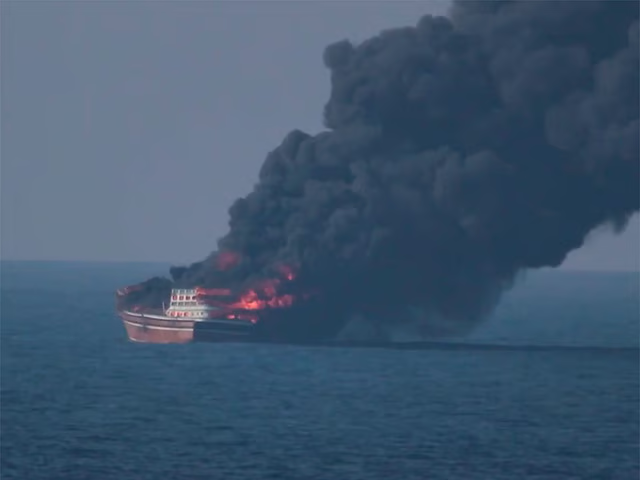
The cross-border fire coincides with severe naval volatility spanning the Red Sea and the Strait of Hormuz. The United Kingdom Maritime Trade Operations (UKMTO) agency verified that two commercial vessels transiting near the Strait of Hormuz sustained damage after being struck by unidentified projectiles.

Further south in the Gulf of Oman, United States Central Command (CENTCOM) confirmed naval forces intercepted and destroyed an Iranian-affiliated dhow after the vessel conducted active surveillance and designated coordinates for nearby American warships.
The rapid succession of military confrontations has sent shockwaves through energy and commodity markets. Citing tightening supply routes, rising bunker fuel surcharges, and sustained operational risks across Persian Gulf waters, the International Energy Agency (IEA) revised its forecast for global oil demand growth downward. With air sirens repeatedly activating across Saudi municipal centres, diplomatic missions in the Kingdom have reiterated heightened safety advisories for expatriates and civil aviation operators.