

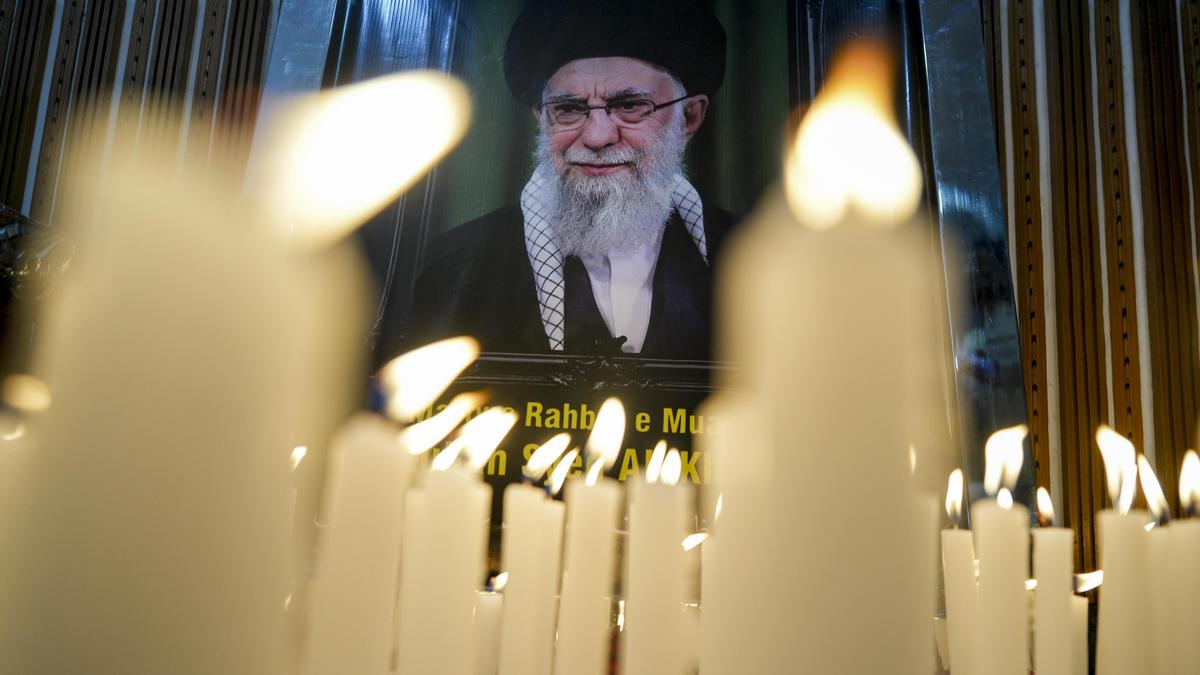
Tehran officially requests the Indian Prime Minister’s presence at the state funeral ceremonies following the demise of the Supreme Leader.

DUBAI: Iran has officially extended an invitation to Indian Prime Minister Narendra Modi to attend the state funeral and memorial services of its Supreme Leader, Ayatollah Ali Khamenei. The formal diplomatic request highlights the deep strategic and historical bilateral ties between New Delhi and Tehran during a period of monumental leadership transition in the Islamic Republic.
According to high-level diplomatic sources, the Iranian administration has reached out to global heads of state, prioritizing key regional allies and economic partners like India. Prime Minister Modi’s potential visit to Tehran for the ceremonies is expected to reinforce India’s ongoing commitment to its diplomatic and economic engagements with Iran, including major regional projects such as the Chabahar Port development.


Arrangements for the funeral of Ayatollah Khamenei, who served as Iran’s Supreme Leader for over three decades, are underway in Tehran. The event is anticipated to draw numerous world leaders, high-ranking foreign delegations, and millions of mourners from across the region, making it one of the most critical geopolitical gatherings in the Middle East this year.
The Indian Ministry of External Affairs (MEA) is reportedly reviewing the official invitation and finalizing the protocol for India’s high-level representation. Diplomatic analysts note that India’s presence at the state funeral is crucial for maintaining geopolitical balance, ensuring energy security, and securing long-term regional connectivity through the International North-South Transport Corridor (INSTC).
Ayatollah Ali Khamenei succeeded Ayatollah Ruhollah Khomeini as the Supreme Leader of Iran in 1989. As the highest authority in the country, his tenure shaped Iran’s domestic policies and regional foreign affairs for decades. India and Iran have traditionally maintained a stable relationship anchored by energy trade and cultural ties, which has continued to evolve despite complex global dynamics and international sanctions.