

Netanyahu faces weeks of coalition negotiations as opposition parties and Arab-led groups emerge as potential kingmakers, with fresh elections still possible.
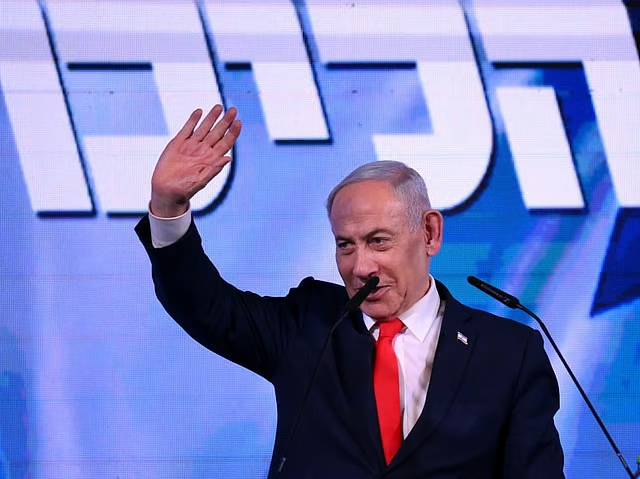
JERUSALEM, Israel — Israeli Prime Minister Benjamin Netanyahu’s political bloc has secured 53 seats in the country’s 120-member parliament, falling short of the majority needed to form a government, according to final election results released by the Central Elections Committee.
The results leave Israel facing weeks of potentially complicated coalition negotiations, with no political bloc currently holding enough seats to govern independently. If efforts to form a government collapse, the country could face another election early next year.
Netanyahu’s main opposition bloc, led by former military chief of staff Gadi Eisenkot’s Yashar party, secured 48 seats. Arab-led parties won the remaining 19 seats, significantly increasing their parliamentary representation and potentially placing them in a decisive position during coalition negotiations.



Coalition negotiations could reshape Israel’s political landscape
Although Netanyahu’s Likud party received the highest number of votes overall, its support declined compared with the previous election in 2022.
The election was widely viewed as a referendum on Netanyahu, Israel’s longest-serving prime minister, despite the country’s parliamentary system requiring voters to choose political parties rather than directly elect a prime minister.
Voter turnout reached nearly 78 per cent, the highest level recorded since 1999.
Israel’s president is expected to designate a political leader to attempt to form the next government. The final results must also be formally certified and submitted to the president.
Two politically sensitive scenarios could emerge from the negotiations.
One possibility involves opposition parties joining forces with Arab-led political groups to secure a parliamentary majority. Another scenario could see parties that campaigned against Netanyahu eventually agreeing to join a government led by him.
Both possibilities have generated considerable political debate in an already deeply divided country.

Arab-led parties emerge as potential kingmakers
Arab-led parties made significant gains in the election, increasing their combined representation to 19 seats.
Opposition leader Gadi Eisenkot has indicated that cooperation with these parties could be considered under certain conditions, including recognition of Hamas, which operates from Gaza, as an extremist organisation.
However, some of the parties expected to cooperate with Eisenkot have ruled out such an arrangement.
Netanyahu has rejected the possibility of forming a government dependent on Arab-led parties.
His Likud party has also alleged that the election was stolen and requested an investigation by the Central Elections Committee. However, the party has not presented evidence supporting its allegations.
Foreign interference allegations add to political tensions
The Central Elections Committee has separately requested that Israel’s Shin Bet intelligence service investigate allegations of unspecified foreign interference in the election.
Although the committee’s request did not specifically mention Arab-led parties, Netanyahu referred to the allegations while arguing against cooperation with them.
Opposition figures have accused the prime minister of using fear-based political messaging to undermine Arab-led parties and deepen discrimination against Arab citizens of Israel, who account for approximately 20 per cent of the population.
The identity of those behind the latest foreign interference allegations remains unclear.
Qatar has strongly denied financing any activities intended to influence the election outcome. The Gulf country has previously faced political controversy in Israel over allegations concerning its influence and relationship with Hamas.
October 7 attack continues to shape Israeli politics
The election took place against the backdrop of the October 7, 2023, Hamas-led attack on Israel, in which militants killed approximately 1,200 people, mostly civilians, and abducted 251 others.
The attack and the subsequent wars in Gaza and other parts of the region remained central issues throughout the election campaign.
For many Israeli voters, security failures surrounding the October 7 attack were a greater political concern than the humanitarian crisis in Gaza.
Netanyahu has rejected calls for an investigation into the security failures surrounding the attack. His supporters argue that he helped restore the country’s position following the assault and achieved significant military objectives in conflicts involving Gaza, Lebanon and Iran.
Several opposition figures have promised to establish an official commission of inquiry if they succeed in forming the next government.
The attack has also deepened mistrust between sections of Israel’s Jewish majority and Arab citizens, particularly over perceptions of their sympathies towards other Palestinians.
Military service exemptions remain a major dividing issue
Another significant issue influencing the election was the exemption from military service granted to members of Israel’s rapidly growing ultra-Orthodox Jewish community.
The exemptions have become increasingly controversial following nearly three years of regional conflict, during which close to 1,000 Israeli soldiers and reservists have been killed.
Netanyahu’s governing coalition has traditionally depended on ultra-Orthodox political parties that insist the exemptions should continue.
Eisenkot, whose son was killed while fighting in Gaza, has pledged to end the exemptions.
The disagreement over military service, national security and the country’s political direction is expected to remain central to the coalition negotiations.
With no bloc holding a parliamentary majority, Israel’s political future now depends on whether rival parties can overcome their differences and agree on a governing arrangement. If negotiations fail, voters could be called back to the polls early next year.