

More than 4,200 people remain missing across 15 municipalities as search teams battle severe infrastructure damage and blocked arterial highways.
UNITED NATIONS / KATHMANDU — September 1, 2026 : Catastrophic flooding and landslides triggered by relentless monsoon rains have killed at least 903 people in Nepal, with more than 4,200 still missing as international agencies launch an urgent multi-sector relief operation.

Nepalese authorities and the United Nations have mobilized more than 20,000 emergency personnel across 15 municipalities and two declared disaster zones, UN Spokesperson Stéphane Dujarric confirmed in New York. While emergency crews have pulled more than 10,000 survivors to safety—including 252 foreign nationals—hopes of finding missing residents are fading under ongoing debris flows and severed transport links.

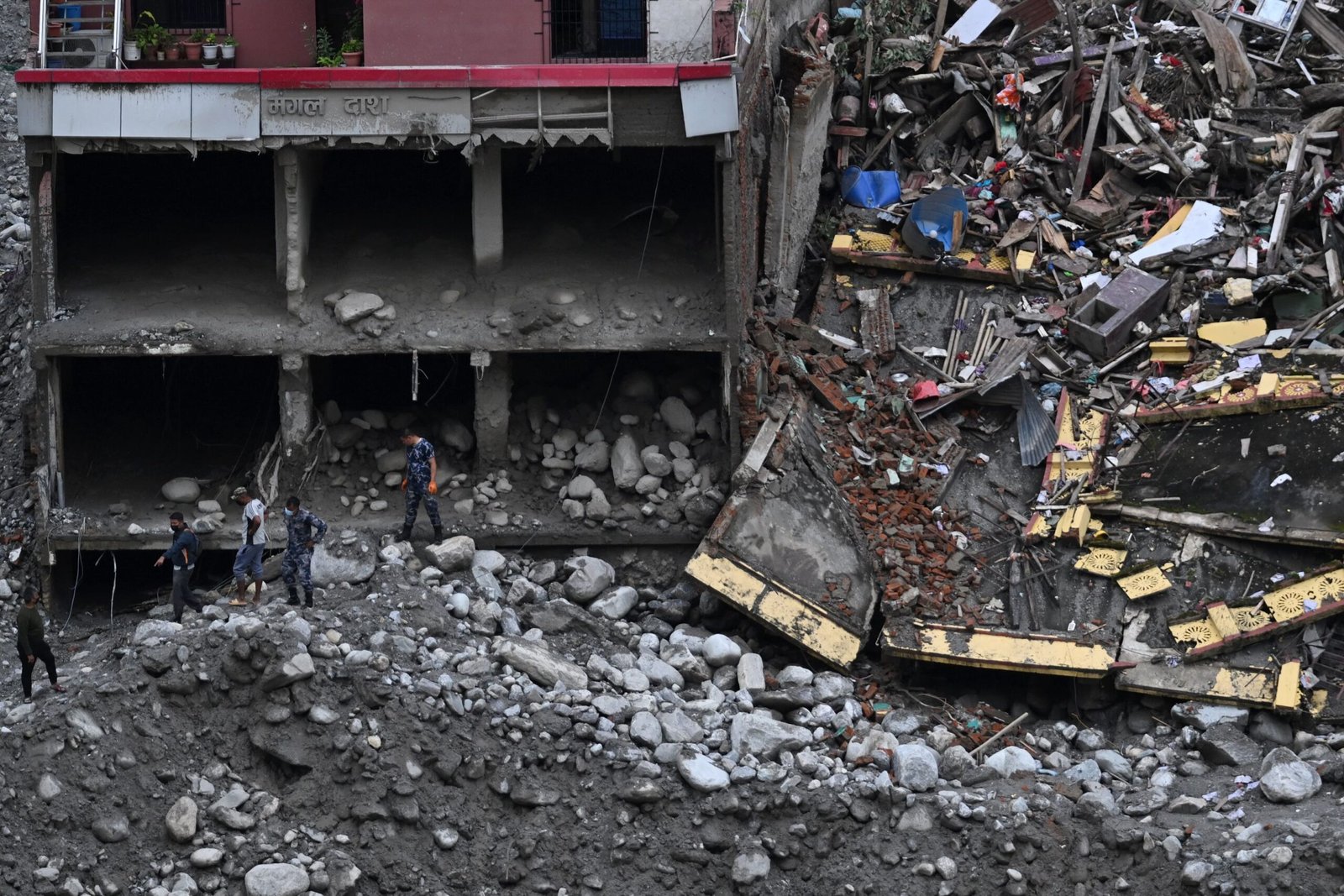
The disaster has caused widespread physical destruction in northern and central regions. Rasuwa district remains the hardest hit, where flash floods wiped out critical utility grids and isolated mountain communities. Debris and mudslides have blocked major transit corridors, including the Prithvi Highway, choking off land routes needed to haul heavy plant machinery and emergency supplies into the affected valleys.


To coordinate the emergency response, the UN Office for the Coordination of Humanitarian Affairs (OCHA) set up an operational base in neighboring Nuwakot. Eleven international medical units are treating injured residents and running mobile clinics. Aid workers have provided psychological first aid to roughly 400 survivors dealing with acute trauma and distributed 3,200 hygiene and dignity kits to women and girls in temporary camps.
Food security has rapidly deteriorated across displaced settlements. The World Food Programme (WFP) dispatched an initial 80 metric tonnes of essential food rations to sustain 9,200 people for two weeks. Concurrently, UNICEF delivered specialized therapeutic food packets to treat 500 children suffering from life-threatening severe acute malnutrition.
United Nations relief agencies estimate that 65,000 survivors urgently require safe drinking water, water purification units, and sanitation facilities to stave off waterborne disease outbreaks. Protection concerns are mounting for children: over 22,000 minors require immediate safeguarding, including 2,600 infants at risk of severe nutritional wasting. Officials are also trying to trace family members for 107 children who became separated in the chaos.
The natural disaster has also struck the region’s education infrastructure. Nineteen schools sustained extensive structural damage, nine of which were completely flattened. Eight surviving school facilities have been converted into emergency dormitories for homeless families, leaving more than 10,000 students without access to classrooms and in need of structured psychosocial support.