


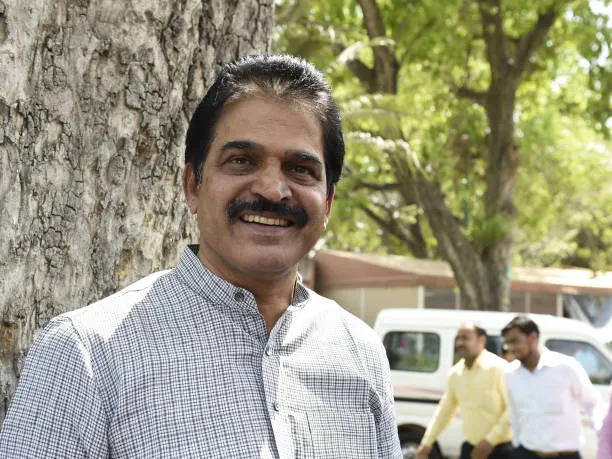
Public sentiment and strategic backing from the Muslim League tipped the scales in favor of Satheesan, leaving K.C. Venugopal’s numerical advantage in the cold.
THIRUVANANTHAPURAM — In a dramatic conclusion to the leadership deadlock following the United Democratic Front’s (UDF) landslide victory in the 2026 Kerala Assembly elections, V.D. Satheesan has emerged as the Chief Minister-designate. The decision by the Congress High Command marks a significant shift in the party’s internal power dynamics, where grassroots popularity and ally consensus ultimately overrode the numerical support of elected legislators and high-level organizational influence.

For days, the national capital was the stage for an intense political tug-of-war. K.C. Venugopal, the AICC General Secretary (Organisation) and a close confidant of Rahul Gandhi, appeared to hold the winning hand. Reports indicated that a majority of the 63 newly elected Congress MLAs—reportedly as many as 47—had initially voiced their support for Venugopal during consultations with central observers. However, as the deliberations unfolded, the “Venugopal plan” began to rattle against a wall of public pressure and strategic interventions. +1
The Pulse of the Streets
The selection process, which began as a routine observer-led report, evolved into a complex exercise in sentiment mapping. While Venugopal emulated the backroom mastery of late Congress stalwart Ahmed Patel—controlling candidate selection and funding—Satheesan relied on a “fiery face-off” style that resonated with the electorate.


Unprecedented scenes of Congress workers and the general public taking to the streets to vouch for Satheesan forced the leadership’s hand. “In a politically aware state like Kerala, any decision based on a miscalculation of the public mood will not go unaccounted for,” noted a senior leader involved in the talks. The High Command was cautioned that bypassing Satheesan would be viewed as a “gross sense of injustice” by the voters who saw him as the principal architect of the anti-LDF wave.

The ‘League’ Factor
Perhaps the most decisive blow to Venugopal’s aspirations came from the Indian Union Muslim League (IUML). As the second-largest constituent in the UDF with 22 seats, the League’s preference carried immense weight. Sources suggest that Priyanka Gandhi played a pivotal role in highlighting the League’s unwavering support for Satheesan.
The IUML leadership, known for its measured diplomacy, made it clear that Satheesan’s leadership was vital for the alliance’s stability moving into the 2026 term and the subsequent General Elections. This alliance pressure, combined with the logistical nightmare of forcing a Lok Sabha MP (Venugopal) to resign and contest a fresh by-election, eventually turned the tide.
A Generational Shift
The fallout of this high-stakes battle has also effectively sidelined veteran leader Ramesh Chennithala, who was briefly considered a compromise candidate. With Satheesan now at the helm, the Congress in Kerala signals a generational transition, moving away from traditional factional alignments toward a model of “Team UDF” populism.
While Venugopal has publicly accepted the decision, pledging his support for the new administration, the ten-day “manthan” (churning) has exposed deep-seated frictions that the new Chief Minister will need to navigate as he prepares to lead Kerala after a decade of Left rule.