

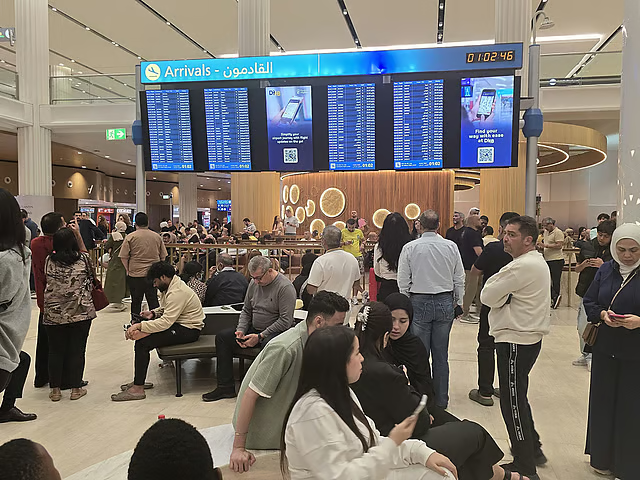

Rising airfares, geopolitical caution, and visa bottlenecks push residents toward shorter transits, regional getaways, and luxury staycations.
DUBAI — With less than a month remaining before schools close for the summer, UAE residents are dramatically shifting their holiday strategies for 2026. While the appetite for travel remains resilient, a combination of soaring ticket prices, regional geopolitical tensions, and persistent visa delays is forcing expatriates and families to abandon traditional long-haul vacations in favor of closer, more cost-effective alternatives.
The trend reflects a broader global pattern. According to the latest data from UN Tourism, international tourist arrivals grew by 2% in the first quarter of 2026, drawing approximately 307 million travelers globally—six million more than the same period last year. However, industry experts note that the conflict in the Middle East has started squeezing growth, tracking 1 to 2 percentage points below initial forecasts. This geopolitical friction, coupled with subsequent oil price hikes and localized jet fuel shortages, has drive up airfares and restricted flight capacities worldwide.

“The ongoing conflict in the Middle East is disrupting travel patterns well beyond the region itself, including rising inflation, particularly in transport and accommodation,” stated UN Tourism Secretary-General Shaikha Al Nuwais, though she emphasized that international tourism continues to show remarkable structural resilience.


Shifting Patterns and Flexible Choices
Major global travel entities, including Expedia and Airbnb, report that affordability and regional accessibility are dominating consumer decisions this summer. In the UAE, outbound travel volume has remained stable compared to last year, but booking behavior has transformed.

Meher Sawlani of Richmond Travels observed that while desire to travel is high, consumers are adjusting expectations. Traditional long-haul destinations like the United States and Japan remain on the radar, but visa processing bottlenecks are steering many toward Europe, the Maldives, and Kenya.
Furthermore, traveler psychology regarding flight routes has shifted. Residents who once insisted on direct flights are now willingly choosing longer layovers and extended transits to secure cheaper airfares. Expatriates are also increasingly adopting “hybrid” itineraries—splitting their summer breaks by spending a portion of time in their home countries and the remainder at a nearby vacation destination to maximize value.
Conversely, some analysts suggest the typical rush is seeing a delayed launch. Afi Ahmed, Chairman of Smart Travels, pointed out that mass bookings have yet to kick off at peak historical levels. “People are being exceptionally cautious about their spending,” Ahmed remarked.
Airlines Launch Strategic Promos
To mitigate rising costs and manage peak operational traffic, airlines are rolling out aggressive incentives. Abu Dhabi-based Etihad Airways expects high summer demand and has introduced targeted baggage and loyalty rewards to ease airport congestion. Passengers utilizing city or home check-in services in Abu Dhabi between May 19 and August 16 will receive an extra 3kg baggage allowance alongside 1,000 Etihad Guest Miles.
Similarly, low-cost carriers are capturing budget-conscious sectors. Air India Express recently initiated its “Xpress Sale,” cutting fares by up to 50% on select domestic and international routes—including crucial UAE-India corridors—for travel through October 10.
The Rise of the UAE “Playcation”
For families opting out of international transit altogether, the local hospitality sector is stepping in with luxury alternatives. Data from travel platform Wego shows a substantial surge in interest for high-end domestic staycations across Ras Al Khaimah, Abu Dhabi, Dubai, Sharjah, and Umm Al Quwain.
Desert resorts, beach boutique hotels, and luxury glamping sites are heavily targeting residents. According to industry reports, properties in Ras Al Khaimah were entirely sold out or on “stop sale” allocations during the recent Eid Al Adha holiday. Beyond leisure, hotels are reporting a major spike in corporate events and employee engagement programs.
Ultimately, the global travel landscape this season is defined by adaptability. As Expedia Group noted in its recent trends report: “This summer, travel isn’t slowing down—it’s being reshaped.” For UAE residents navigating the final countdown to the school break, the choice is no longer about whether to take a holiday, but how to plan it with maximum efficiency and minimal friction.