

Regional tensions have escalated dramatically in the Gulf following overnight precision military strikes launched by the United States against more than 80 targets in Iran. The operation, executed by the US Central Command (CENTCOM), comes as a direct retaliation against Tehran after multiple commercial vessels were attacked in the strategic Strait of Hormuz. In response to the widening conflict, neighboring Gulf nations including Kuwait and Bahrain have sounded warning sirens and activated their air defense networks.


Key Developments:
- Massive US Strikes: The Pentagon confirmed targeting 80+ strategic locations inside Iran, including air defense networks, command stations, coastal radar systems, and anti-ship missile units.
- IRGC Naval Assets Hit: Over 60 small boats operating under Iran’s Islamic Revolutionary Guard Corps (IRGC) near the shipping corridors were targeted and degraded by US forces.
- Oil Sanctions Reimposed: Coinciding with the strikes, Washington revoked a temporary license that previously allowed Iran to export crude oil under a fragile interim ceasefire agreement.
- Gulf Nations on High Alert: Warning sirens echoed across Bahrain and Kuwait on Wednesday morning. Kuwait successfully engaged its air defenses to counter incoming threats, while Bahrain urged residents to seek immediate shelter following incoming missile warnings.
- Iran Claims Counterattacks: The IRGC claimed to have retaliated by striking 85 US military positions in Kuwait and Bahrain, alongside allegedly shooting down an American MQ-9 Reaper drone over Bushehr province. These assertions have not been independently verified.
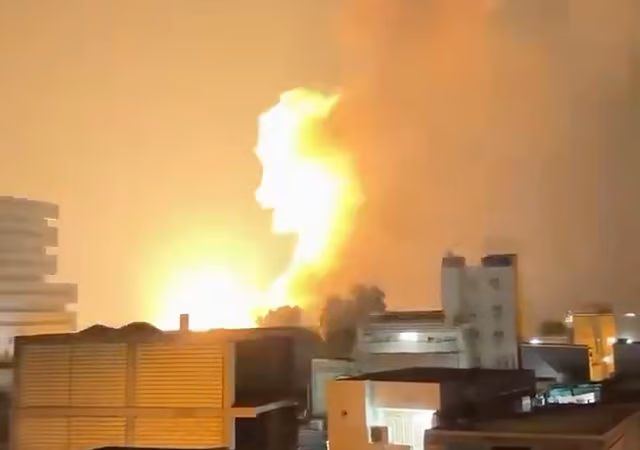
- Explosions Reported: Heavy blasts were recorded in key Iranian maritime areas including Kharg Island (a crucial oil export hub), Bandar Abbas, Sirik, and Qeshm Island.
- Global Energy Concerns: The sudden disruption and military action in the Strait of Hormuz have triggered sharp movements in international energy markets, sending global oil prices up by over 3% in early trading.