


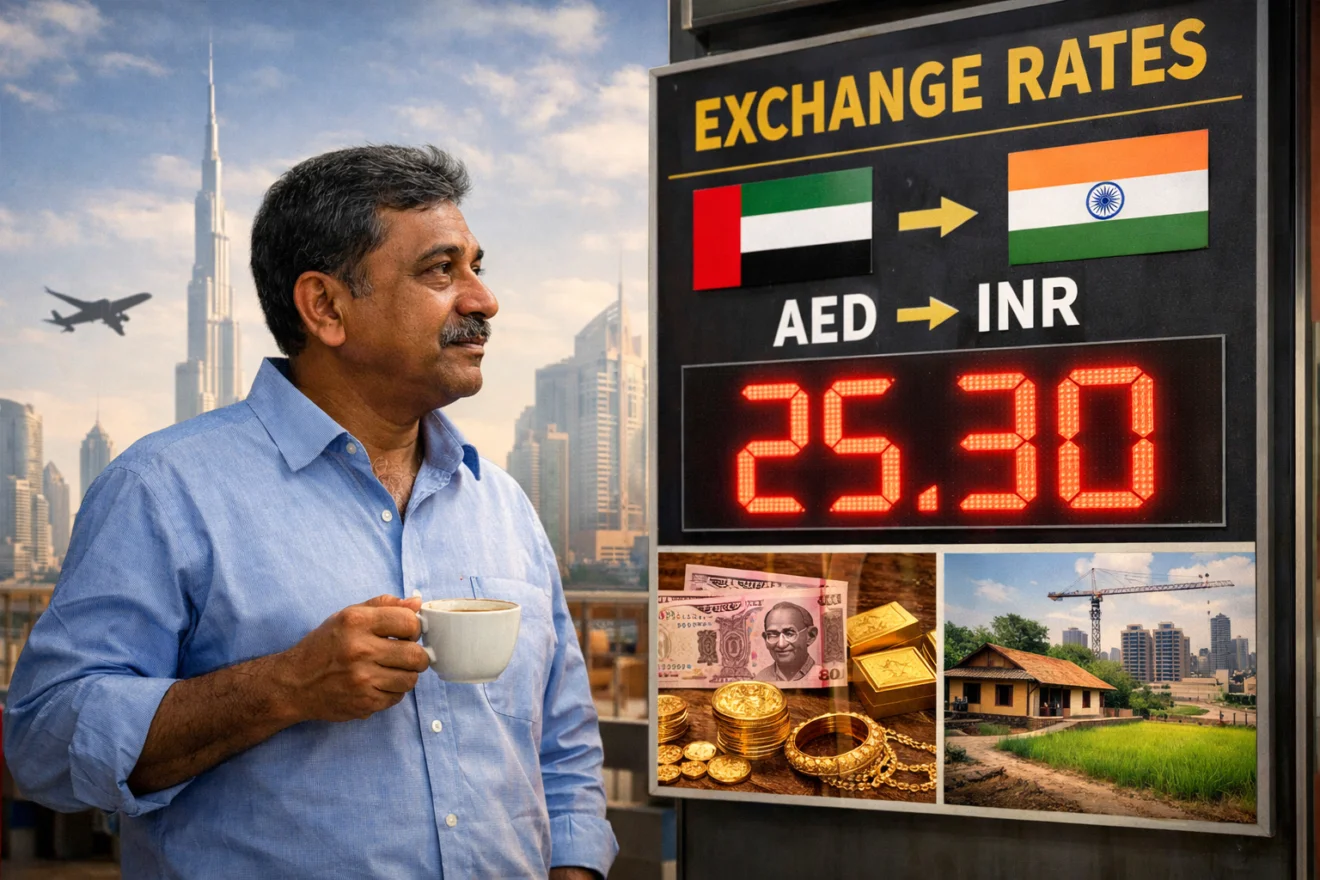
Dubai: The recent fall of the Indian rupee against the UAE dirham has triggered a surge in remittances from Gulf-based expatriates, offering immediate financial gains. With the exchange rate crossing ₹25 per dirham, many Indian workers in the UAE are receiving significantly higher returns when sending money home.
For instance, an expatriate earning AED 10,000 and remitting AED 7,000 now gets thousands of rupees more compared to previous months. For lower-income workers, this increase can make a tangible difference in covering household expenses, education, and daily needs back in India. Exchange houses across the UAE have reported a sharp rise in transactions as the rate touched historic highs.
However, beneath this apparent advantage lies a more complicated financial reality. Economists point out that while exchange rates have improved, the real purchasing power of expatriates has declined over time. Inflation, rising gold prices, and skyrocketing land values—especially in states like Kerala—have significantly reduced what remitted money can actually buy.



Three decades ago, a modest Gulf salary could fund major life goals such as building a home, buying land, or accumulating gold. Today, despite salaries increasing several times, those same goals require disproportionately higher spending. Gold prices in the UAE have surged dramatically, while land prices in Kerala have multiplied many times over, narrowing the gap between earnings and asset ownership.

The rupee’s depreciation is driven by multiple global factors, including rising crude oil prices, geopolitical tensions in West Asia, and capital outflows from emerging markets. While this benefits remittance flows in the short term, it also signals underlying economic pressures.
Financial advisors suggest that expatriates should take advantage of the current exchange rate for planned expenses like property purchases or education payments. At the same time, they recommend spreading remittances over time and diversifying investments to safeguard long-term financial stability.
As India continues to receive record remittances from the Gulf, the situation highlights a key insight: a weaker rupee may increase the value of money sent home, but it does not necessarily translate into greater wealth. For many expatriates, the real challenge lies not in earning more, but in preserving the value of what they earn.