


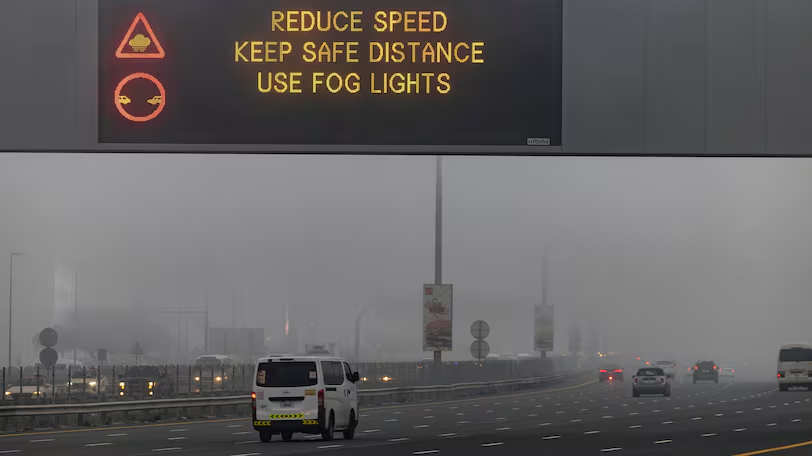
National Centre of Meteorology projects convective cloud activity and reduced road visibility through Monday
DUBAI, October 16, 2026 : Dense fog rolled across inland and coastal highways in the United Arab Emirates early Friday, severely curtailing morning visibility before a multi-day weather system expected to generate convective rain clouds, freshening winds, and localized dust storms.
The National Centre of Meteorology (NCM) confirmed that foggy and misty conditions blanketed sections of the country during the early commuting hours on Friday. Surface humidity levels surged overnight, prompting transport authorities to urge caution on inter-emirate routes.
Forecasters anticipate daytime skies remaining fair to partly cloudy, but conditions will destabilize across eastern regions by Friday afternoon. Convective clouds are predicted to form over elevated topography, raising the prospect of localized downpours extending into adjacent inland corridors.


Winds will blow southeasterly before swinging northwesterly across central expanses. While baseline wind speeds should fluctuate between 10 and 25 km/h, convective drafts may produce bursts topping 45 km/h, kicking up loose sand and deteriorating horizontal visibility in open terrain. The Arabian Gulf and Oman Sea are slated to stay calm, maintaining slight conditions.


The meteorological pattern will persist through the weekend. High nighttime humidity is expected to generate fresh rounds of fog or mist across coastal communities and interior valleys through Saturday morning. Saturday afternoon presents a renewed potential for convective cloud cover with scattered showers.
Rain-bearing formations will likely shift toward northern and eastern sectors by Sunday afternoon, followed by another humid overnight cycle leading into Monday. By Monday afternoon, convective cloud cover could trigger rain bands across southern and eastern stretches.
Through Monday, daytime wind gusts may frequently touch 40 km/h during storm development. Motorists navigating morning hours over the coming four days should monitor real-time weather bulletins and follow variable speed limit advisories triggered during fog incidents.