


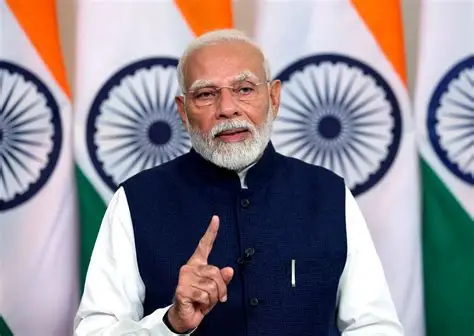

Narendra Modi on Saturday strongly criticised Opposition parties after the Women’s Reservation Bill failed to pass in the Lok Sabha, accusing them of blocking a key reform aimed at enhancing women’s political representation.
Addressing the nation, Modi alleged that parties including the Indian National Congress, Dravida Munnetra Kazhagam, All India Trinamool Congress, and Samajwadi Party were responsible for preventing the legislation from passing.

“Before the eyes of the entire nation, the Congress and its allies have committed the foeticide of this honest endeavour,” Modi said, describing the outcome as an injustice to both the Constitution and women across the country.


The government failed to secure the required two-thirds majority for the Constitution (131st Amendment) Bill, 2026, which was necessary to enable the implementation of the Women’s Reservation Bill. The motion received 298 votes in favour and 230 against, falling short of the constitutional threshold.

The proposed legislation aimed to expand the strength of the Lok Sabha from 543 to a maximum of 850 seats and introduce 33 percent reservation for women in both the Lok Sabha and state legislative assemblies. Following the failure of the constitutional amendment, two related bills were not taken up for voting.
Modi issued an apology to women across the country, acknowledging the setback. “I apologise to all the mothers and the nation,” he said, adding that the bill’s failure had stalled progress on women’s empowerment despite the government’s efforts.
He accused Opposition parties of prioritising political considerations over national interest, stating that “selfish politics” had led to the bill’s defeat. The Prime Minister also criticised what he described as celebrations by Opposition leaders following the outcome, calling it disappointing.
Further, Modi alleged that the Congress has historically opposed women’s reservation and labelled it an “anti-reform” party, accusing it of consistently obstructing key legislative initiatives.
The development marks a significant political setback for the government’s reform agenda and raises questions about the future of women’s reservation in India’s legislative framework.