


Tehran demands transit fees in local currency and exclusion of ‘hostile vessels’ while US-led blockade continues to strain global oil markets.
SAINT PETERSBURG / WASHINGTON – Tensions between the United States and Iran entered a complex new phase on Monday as Tehran proposed a controversial new law that would grant its armed forces full military authority over the Strait of Hormuz. The move comes as diplomatic efforts to secure a lasting ceasefire appear to have stalled, leading to a volatile mix of naval blockades, soaring oil prices, and high-stakes shadow diplomacy.
The Hormuz Gambit: Military Control and the Rial
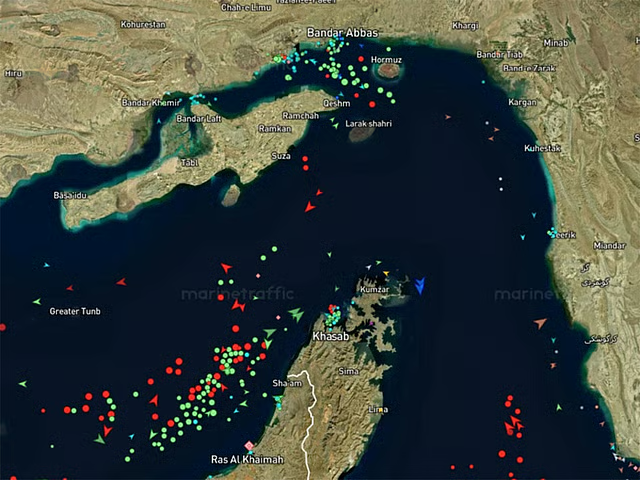
Ebrahim Azizi, head of the National Security Commission in Iran’s parliament, announced on state television that the proposed legislation seeks to codify the military’s control over the world’s most vital oil chokepoint. Under the proposal, Iran would officially prohibit the passage of “hostile vessels” and demand that all financial gains or transit-related fees from the strait be paid in the Iranian rial.
“The armed forces are already in control of the strait,” Azizi stated, framing the law as a move to safeguard national sovereignty. The strategic waterway remains largely closed, keeping global crude prices above the $100-a-barrel mark and forcing international buyers—notably Japan—to seek alternative supplies from as far as Texas.


Diplomatic Stalemate and the Russian Connection
While Iran asserts control at sea, its top diplomat, Abbas Araghchi, arrived in Saint Petersburg for high-level consultations with Russian President Vladimir Putin. During the meeting, Putin reportedly praised the “bravery” of the Iranian people and pledged Russia’s support in bringing peace to the region.

Araghchi, however, was quick to blame Washington for the recent collapse of peace talks held in Pakistan. He cited “excessive demands” from the US as the primary reason for the deadlock. Despite the impasse, Iran has reportedly floated a new proposal via Pakistani intermediaries. This fresh deal suggests a phased approach: prioritizing the reopening of the Strait of Hormuz and ending the US naval blockade, while postponing sensitive nuclear negotiations to a later date.

The US Response: Pressure and Blockades
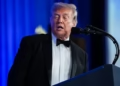
In Washington, President Donald Trump signaled that the conflict might be approaching a “turning point.” He argued that sustained military and economic pressure has weakened Tehran’s position, suggesting that internal leadership divisions in Iran could accelerate a resolution.
Simultaneously, the US Central Command (CENTCOM) confirmed it is strictly enforcing a maritime blockade. American forces have intercepted and redirected at least 38 vessels attempting to access Iranian ports since the operation began. Despite these measures, reports suggest Iran has successfully moved roughly 4.6 million barrels of crude—worth nearly $400 million—by “going dark” and switching off transponders to evade US surveillance.
Regional and Global Fallout
The ripples of the conflict are being felt across the Middle East and Europe:
- Lebanon: President Joseph Aoun called for direct negotiations with Israel to end the war with Hezbollah, labeling those who dragged the country into the conflict as “traitors.” Conversely, Hezbollah leader Naim Qassem rejected such talks as a “grave sin.”
- The GCC: Dr. Anwar Gargash, Diplomatic Adviser to the UAE President, described recent Iranian aggression against GCC countries as “premeditated,” noting that the intensity of the conflict has exceeded regional expectations.
- Economy: The European Central Bank (ECB) is closely monitoring the crisis. An inflation spike triggered by the energy shock has pushed eurozone consumer prices to 2.6%, well above the 2% target, complicating future interest rate decisions.