


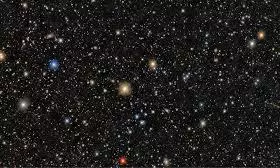
Astronomers have discovered one of the oldest known stars, PicII-503, in the dwarf galaxy Pictor II, offering a rare window into the early stages of the universe.
Located around 150,000 light-years from Earth, PicII-503 is classified as a second-generation (Population II) star, formed from material left behind by the universe’s first stars. The discovery provides crucial insights into how the earliest stellar generations influenced cosmic evolution.
According to findings published in Nature Astronomy on March 16, 2026, the star has an extremely low metal content, with iron levels just 1/40,000th that of the Sun. This makes it one of the most metal-poor stars ever identified outside the Milky Way.



Scientists believe such stars formed after the first-generation (Population III) stars ended in powerful supernova explosions, dispersing elements like carbon and iron into space. PicII-503’s chemical signature supports this theory, showing a carbon-to-iron ratio more than 1,500 times higher than that of the Sun.

The discovery was made under the MAGIC (Mapping the Ancient Galaxy in CaHK) project using the Dark Energy Camera mounted on the Víctor M. Blanco Telescope. Follow-up observations with the Very Large Telescope and the Baade Magellan Telescope confirmed its unusual chemical composition.
Lead researcher Anirudh Chiti of Stanford University noted that the star lies at the extreme boundary of what scientists thought possible. Researchers say the finding helps trace early chemical enrichment in faint dwarf galaxies, improving our understanding of how the first stars shaped the universe.