


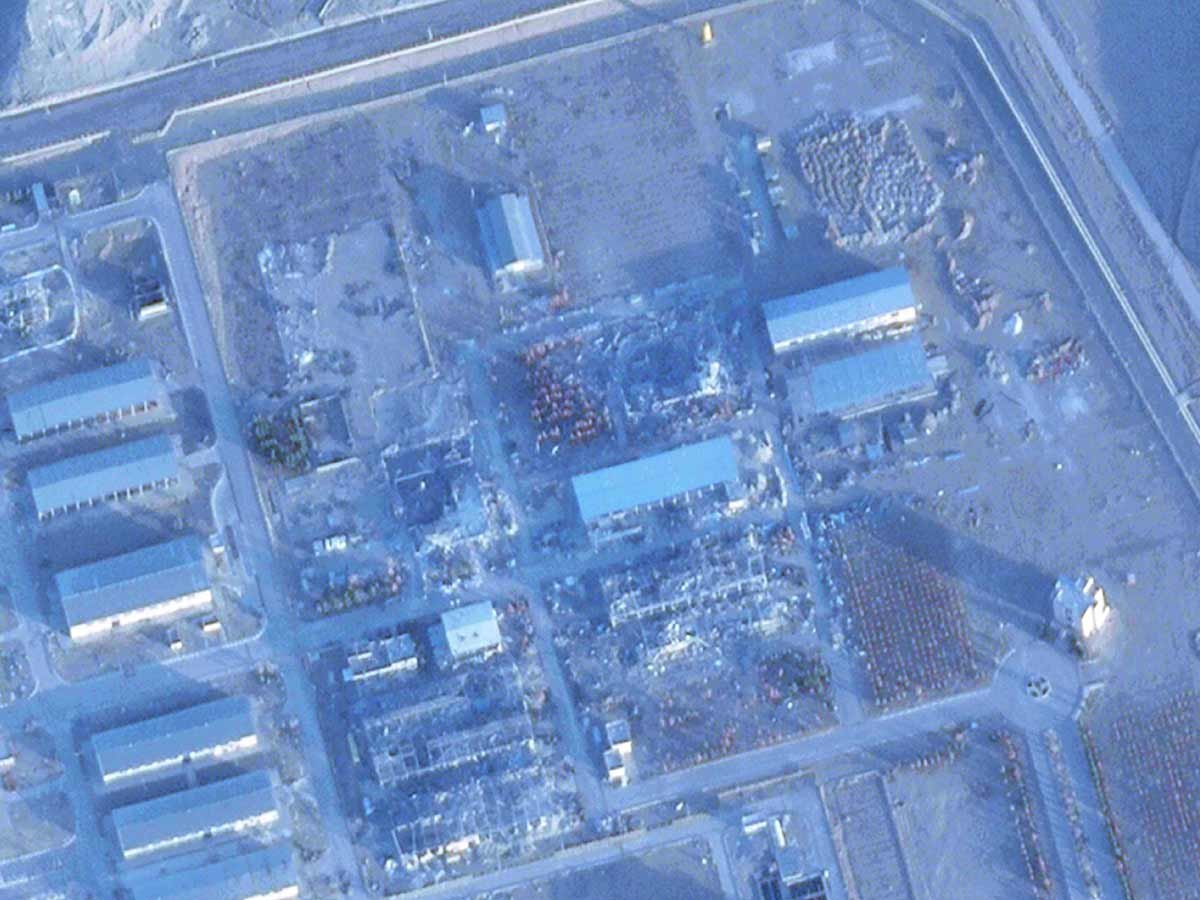
IAEA Chief Rafael Grossi calls for urgent inspections and removal of nuclear material following U.S.-Israeli strikes
UNITED NATIONS — The head of the United Nations’ nuclear watchdog, Rafael Grossi, has revealed that a significant portion of Iran’s highly enriched uranium is likely still stored at the Isfahan nuclear complex. This disclosure comes in the wake of a series of airstrikes by U.S. and Israeli forces over the past year, which have severely hampered international oversight of the facility.
In an exclusive interview on Tuesday, Grossi, the Director-General of the International Atomic Energy Agency (IAEA), stated that the agency’s “best estimate” places roughly 200 kilograms of uranium enriched to 60% purity within tunnels at the Isfahan site. This material is considered just a short technical step away from the 90% enrichment required for weapons-grade levels.
The Intelligence Gap: Satellite Evidence vs. Physical Access
IAEA inspections at Isfahan were abruptly suspended in June 2025 during a 12-day conflict that saw the United States target multiple Iranian nuclear installations. Since then, the agency has relied on satellite imagery to track movements at the site.



“We haven’t been able to inspect or to verify that the material is there and that the IAEA seals remain intact,” Grossi said. He specifically noted Airbus satellite imagery from June 9, 2025—just before the outbreak of the war—showing a truck transporting 18 blue containers into a tunnel at the Isfahan Nuclear Technology Center. These containers are believed to hold the highly enriched stockpile.

Escalating Stockpiles and Global Risks
According to IAEA data, Iran’s total stockpile of 60% enriched uranium has reached 440.9 kilograms. Experts warn that this quantity is theoretically sufficient to produce up to 10 nuclear bombs should Tehran decide to weaponize its program.
While the U.S. administration has previously claimed that military strikes “obliterated” Iran’s atomic capabilities, Grossi’s assessment suggests a more resilient infrastructure. He emphasized that for any diplomatic resolution to hold, this material must either leave Iranian soil—potentially to Russia—or be “blended down” to lower enrichment levels.
Geopolitical Deadlock and the “Political Will” for a Deal
The IAEA’s findings coincide with the five-year review of the Nuclear Nonproliferation Treaty (NPT) at the UN. Iran, as a signatory, is legally required to grant access to its facilities, including Natanz and Fordo.
Current diplomatic efforts appear stalled over sequencing. Iran has recently proposed ending its blockade of the Strait of Hormuz in exchange for the lifting of U.S. sanctions and a permanent end to hostilities. However, U.S. Secretary of State Marco Rubio remains skeptical, describing Tehran as “skilled negotiators looking to buy time.”
Grossi remains a cautious optimist, noting a “flicker of hope” as both sides express an interest in an agreement. However, he stressed that success hinges on Tehran’s “political will” and a mutual agreement on which concessions must come first.