

CENTCOM intensifies maritime operations to cut off Iranian port access amid rising regional tensions.
MANAMA/WASHINGTON – The United States Central Command (CENTCOM) has confirmed that its naval blockade against Iran remains “fully enforced,” reporting that 58 commercial vessels have been redirected since mid-April. In a significant escalation of maritime enforcement, US forces also disabled three Iranian-flagged tankers this week to prevent them from reaching their destinations.
The operation, which began on April 13, aims to monitor and restrict all commercial shipping linked to Iranian ports. According to an official statement from CENTCOM, the blockade is a strategic effort to maintain control over the Strait of Hormuz and the Gulf of Oman, critical corridors for global energy transit.
Precision Strikes on Iranian Tankers
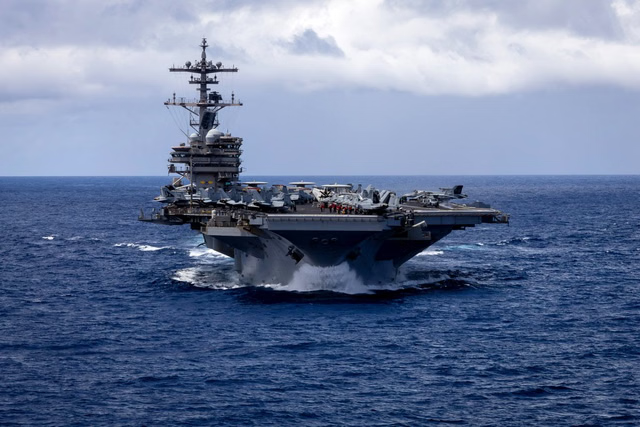
The enforcement reached a peak on May 8, when US Navy assets intercepted two Iranian-flagged oil tankers, the M/T Sea Star III and the M/T Sevda. As the vessels attempted to enter an Iranian port through the Gulf of Oman, an F/A-18 Super Hornet—operating from the USS George H.W. Bush—fired precision munitions into the ships’ smokestacks.


The strike successfully disabled the vessels without sinking them, effectively halting their transit. This followed a similar engagement on May 6, where the M/T Hasna was disabled after a Super Hornet from the USS Abraham Lincoln targeted its rudder with 20mm cannon fire.

“All three vessels are no longer transiting to Iran,” CENTCOM stated, emphasizing that these actions were necessary to ensure compliance with maritime restrictions.
Strategic Choke Point Under Pressure
The Strait of Hormuz is widely regarded as the world’s most important energy transit point. With nearly a quarter of global oil flows passing through this narrow waterway, the ongoing blockade has created immense pressure on regional logistics.
Adm. Brad Cooper, Commander of CENTCOM, praised the precision of the operations:

“US forces in the Middle East remain committed to full enforcement of the blockade. Our highly trained men and women in uniform are doing incredible work to maintain maritime security and enforce these restrictions.”
Background: A Region on Edge
The blockade follows months of escalating tensions in the Gulf. While diplomatic efforts, led by Pakistan, have attempted to broker a permanent ceasefire, the US has maintained that the blockade will remain in place until specific security conditions are met.
The redirecting of 58 ships and the disabling of non-compliant tankers signal a “zero-tolerance” policy regarding Iranian maritime trade. For the global audience and the massive expatriate community in the Gulf, these developments highlight a precarious period for international shipping and regional stability.