

Global energy markets brace for impact as diplomatic deadlock threatens a humanitarian crisis and sends oil prices soaring.
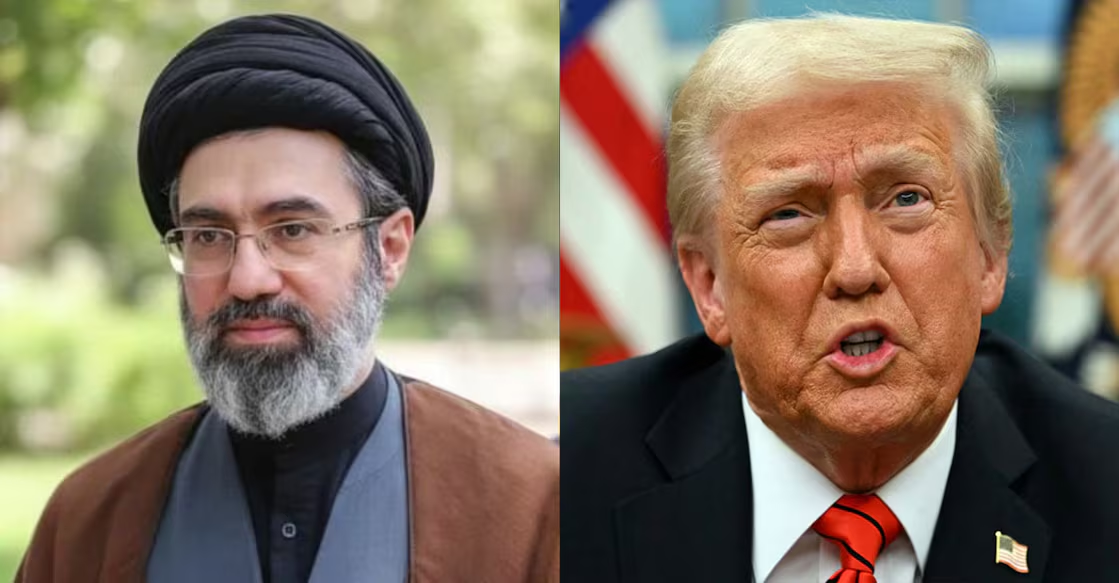
WASHINGTON D.C.: The fragile hope for peace in the Middle East has taken a significant blow as US President Donald Trump declared the current ceasefire to be on “massive life support.” The statement follows a total deadlock in negotiations between Washington and Tehran, raising the specter of a return to open conflict in the Gulf and exacerbating a global energy shock.
Speaking to reporters on Monday, President Trump used a stark medical analogy to describe the state of diplomacy. “The ceasefire is on massive life support, where the doctor walks in and says, ‘Sir, your loved one has approximately a one per cent chance of living,’” he said, highlighting the deep divide between the two nations.


The Deadlock: Assets and Blockades
The primary catalyst for the current breakdown is a counteroffer from Tehran that Trump dismissed as “totally unacceptable.” While the White House has not specified the exact points of contention, the Iranian Foreign Ministry confirmed it has demanded the release of billions in frozen assets held in foreign banks and an immediate end to the US naval blockade of its ports.

Tehran’s demands also include a halt to the war “across the region,” a move interpreted as a call for Israel to cease strikes against Hezbollah in Lebanon. Iranian spokesman Esmaeil Baqaei insisted these were not “concessions” but “legitimate rights” of the Iranian people.
Economic Shockwaves and the Hormuz Crisis
The diplomatic failure sent immediate ripples through the global economy. Crude oil prices jumped by more than four percent following the news. Amin Nasser, CEO of Saudi Aramco, warned that the world is experiencing the largest energy supply shock in history.
“If the Strait of Hormuz opens today, it will still take months for the market to rebalance,” Nasser told investors, adding that any further delays could push normalization of the markets into 2027. The Strait, a vital artery for a fifth of the world’s oil and LNG exports, remains a flashpoint as Iran seeks to impose tolls and restrict traffic—a move Washington has labeled “unacceptable.”

Humanitarian and Nuclear Concerns
Beyond energy, the United Nations has sounded the alarm on a looming humanitarian catastrophe. The blockade and conflict have disrupted the supply of fertilizers, threatening food security for millions. Jorge Moreira da Silva, executive director of the UN Office for Project Services, warned that the crisis could force an additional 45 million people into hunger.
Meanwhile, the core issue of Iran’s nuclear program remains unresolved. Israeli Prime Minister Benjamin Netanyahu emphasized in a recent interview that the conflict would not end until Iran’s enrichment sites are dismantled. Reports suggest Iran offered to dilute some highly enriched uranium in exchange for guarantees, but the proposal failed to gain traction in Washington.
Looking Ahead
Diplomatic focus now shifts to President Trump’s upcoming visit to Beijing on Thursday. US officials expect Trump to pressure Chinese President Xi Jinping—a major purchaser of Iranian oil—to help break the stalemate. However, with Iranian officials warning that their “restraint is over,” the window for a peaceful resolution appears to be closing rapidly.