


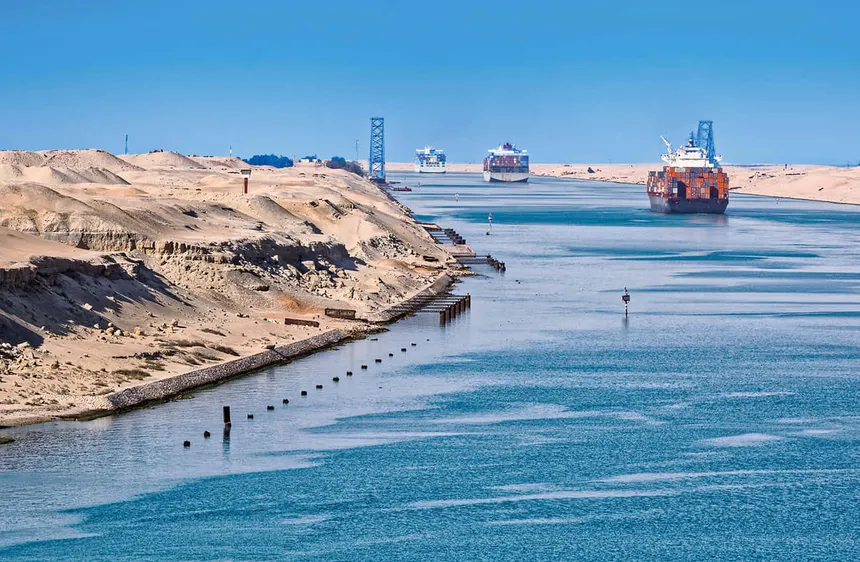
TEL AVIV/SANAA — Fears of a total blockade of the Suez Canal are mounting as Yemen’s Houthi rebels officially entered the month-old regional war, launching their first ballistic missile strike toward Israel on Saturday, March 28, 2026. This escalation has put the global economy on high alert, with experts warning that a “maritime war” could effectively sever the world’s most vital trade arteries.

A New Front in the Conflict
The Iran-aligned Houthi movement, which had previously maintained a tenuous ceasefire with Saudi Arabia, broke its silence with a barrage of missiles targeting “sensitive military sites” in southern Israel. While the Israeli Defense Forces (IDF) confirmed the successful interception of a missile over the Negev, the military implication is secondary to the economic threat now looming over the Red Sea.
“Our fingers are on the trigger,” Houthi military spokesperson Yahya Saree declared, warning that any further escalation against Iran or the use of the Red Sea for “hostile operations” would result in direct military intervention.
The “Twin Chokepoint” Crisis
Economic analysts are sounding the alarm over a potential “twin chokepoint” shutdown. With Iran already maintaining a tight grip on the Strait of Hormuz, a Houthi-led blockade of the Bab el-Mandeb Strait would effectively isolate the Suez Canal.


- Trade Volume: Approximately 12% of global trade and 10% of seaborne oil pass through these waters.
- Shipping Reroutes: Major carriers like Maersk and Hapag-Lloyd have already begun pausing Trans-Suez sailings, rerouting vessels around the Cape of Good Hope.
- Economic Impact: Rerouting adds up to three weeks to journey times, skyrocketing fuel costs and insurance premiums, which could trigger a fresh wave of global inflation.
Global Economy at Stake
The Suez Canal is a critical source of revenue for Egypt, which earned nearly $9.4 billion from the waterway annually before recent disruptions. A prolonged closure would not only devastate the Egyptian economy but also cripple supply chains for electronics, grain, and energy across Europe and Asia.

As the US and Israel continue strikes on Iranian infrastructure, the “weaponization of trade” by Tehran’s proxies remains the most potent card in the escalating conflict. The international community now watches the Red Sea with bated breath, fearing that the next missile may not target a city, but the very flow of global commerce.