


Despite a flurry of peace proposals, the gap between Washington’s military objectives and Tehran’s demands remains wide, threatening global energy security.
DUBAI – As the conflict between the United States and Iran enters its tenth week, the initial promise of a swift military resolution has given way to a grueling diplomatic stalemate. Despite at least six major ceasefire frameworks exchanged through Pakistani and Omani mediators since February, a definitive breakthrough remains elusive, exposing the limits of American military might in forcing a political surrender.
A Cycle of Optimism and Threats
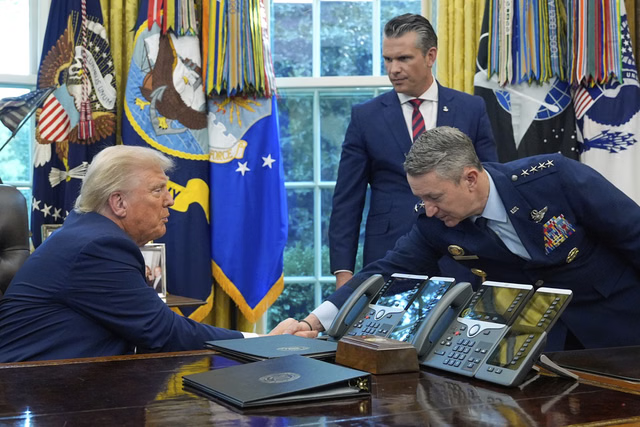
The White House has been characterized by a duality of messaging that has left global markets and allies on edge. President Donald Trump, speaking from the Oval Office, expressed a characteristic, if unsubstantiated, confidence: “We’re dealing with people that want to make a deal very much. If they don’t agree, they’ll end up agreeing shortly thereafter.”

However, this optimism is frequently punctuated by aggression. On Truth Social, the President warned that if Tehran fails to accept US terms, “the bombing starts” at a “much higher level and intensity.” This rhetoric stands in stark contrast to Secretary of State Marco Rubio’s recent assertion that the war was effectively “over,” highlighting a perceived strategic drift within the administration.


The Leverage of the Strait
The conflict has shifted from the skies to the seas, specifically the Strait of Hormuz. Once a guaranteed passage for global oil, the waterway is now Tehran’s most potent bargaining chip.
The latest “one-page” memorandum of understanding currently under review includes:

- A temporary moratorium on Iranian uranium enrichment.
- Phased relief from economic sanctions.
- The release of frozen Iranian assets.
- Coordinated steps to reopen the Strait of Hormuz to commercial traffic.
While Washington seeks a return to “freedom of navigation” without restrictions, Iranian officials have dismissed the proposal as a “list of American wishes,” signaling that they will only end the war on their own terms.
The “Silver Bullet” Failure
Analysts suggest that the US approach—a mix of “Project Freedom” naval escorts, targeted bombings, and assassinations—has failed to trigger the internal collapse of the Iranian leadership that some in Washington anticipated.
“This conflict is not over,” warns Anja Manuel, executive director of the Aspen Security Forum. “You can change the name of the operation, but the reality is the Strait is closed, oil prices are sky-high, and American companies are suffering.”
As the war drags on, the Trump administration faces narrowing options. The “silver bullet” strategy of relying on dramatic military moves has yet to yield a strategic result, leaving the conflict suspended in a volatile state between further escalation and a fragile, unsigned peace.