


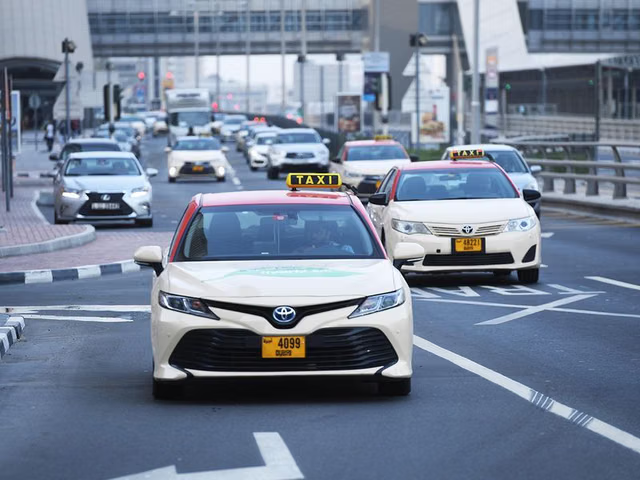
Dubai’s leading mobility provider reallocates fleet to high-growth sectors like e-hailing and delivery services while staying on track for autonomous and electric transitions.
DUBAI: Mansoor Rahma Alfalasi, CEO of Dubai Taxi Company (DTC), has confirmed that the organization has not undertaken any workforce reductions, emphasizing that drivers remain the company’s “most valuable asset.” Despite evolving travel patterns and shifting market dynamics, the mobility giant has maintained full operational functionality across all its verticals, including taxis, buses, limousines, and delivery services.
Strategic Fleet Redeployment
In a move to navigate changing customer behaviors, DTC has actively reallocated its massive fleet of over 11,000 vehicles. Capacity has been redirected away from fluctuating sectors, such as airport transfers, toward essential, shorter-distance trips and the rapidly expanding e-hailing segment.


“The impact we have seen is demand-driven rather than operational,” Alfalasi explained. This distinction has allowed the company to remain resilient without structural disruptions. Notably, the delivery bike division has emerged as a powerhouse, recording a staggering 84% year-on-year revenue growth, fueled by partnerships with major platforms like Talabat and Careem.

Financial Resilience and Autonomous Future
The CEO highlighted DTC’s flexible cost model as a key stabilizer. Since driver earnings are largely commission-based, the company’s cost structure naturally scales with trip volumes. Alfalasi further noted that DTC has not required external borrowing, paying dividends entirely from internal cash generation—a testament to its robust financial health.

Looking forward, DTC is doubling down on innovation. The company is progressing with its autonomous taxi rollout, aligning with Dubai’s ambitious goal to have 25% of all transportation be autonomous by 2030. Furthermore, the company is preparing for the era of “flying taxis,” positioning its fleet as the vital “first and last-mile” link between vertiports and final destinations.
The Road to a Greener Fleet
Sustainability remains a core pillar for DTC. The company aims to transition its entire taxi and limousine fleet to 100% electric by 2040. Currently operating over 500 electric vehicles (EVs), DTC is collaborating with DEWA to install 208 charging points across 11 strategic locations, including ultra-fast chargers at its headquarters expected by Q2 2026.
Integrating Artificial Intelligence (AI) is also streamlining operations. Through its EV Mobility Intelligence Platform, DTC utilizes predictive analytics for demand forecasting and route optimization, ensuring the fleet operates at peak efficiency regardless of global fuel price volatility.