

US President states Xi Jinping agrees the Strait of Hormuz must reopen, though Beijing remains hesitant to pressure Tehran.
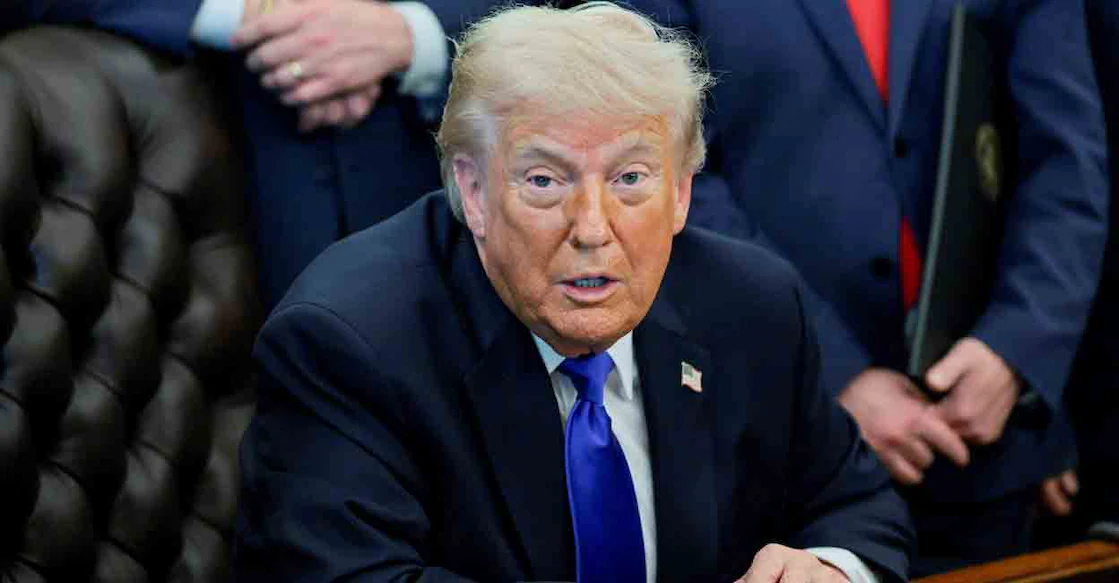
BEIJING / WASHINGTON — US President Donald Trump has declared that his patience with Iran is rapidly depleting, warning that Tehran must come to the negotiating table to resolve the ongoing maritime crisis. Speaking to reporters aboard Air Force One on Friday following two days of high-stakes talks with Chinese President Xi Jinping in Beijing, Trump revealed he is considering lifting US sanctions on Chinese oil companies as part of ongoing diplomatic maneuvers to reopen the critical Strait of Hormuz.
China remains the largest buyer of Iranian crude oil. While Trump indicated that President Xi agreed the vital energy corridor must be reopened, Beijing has given no definitive commitment that it will actively pressure Tehran to do so.
No Favours Asked in Beijing Negotiations
The diplomatic standoff follows Iran’s effective closure of the Strait of Hormuz to most commercial shipping. The closure was enacted in response to US-Israeli military strikes that commenced on February 28, plunging global energy markets into unprecedented disruption.


When pressed on whether President Xi had offered a firm commitment to intervene with Iranian leadership, Trump maintained a transactional stance on the negotiations.
“I’m not asking for any favours because, when you ask for favours, you have to do favours in return,” Trump stated. “We don’t want them to have a nuclear weapon, we want the straits open.”
While the Chinese Foreign Ministry bypassed direct comments on Trump’s specific remarks, it released a blunt assessment of the broader hostilities, stating, “This conflict, which should never have happened, has no reason to continue.”
The White House later confirmed that during the bilateral discussions, President Xi explicitly opposed any Iranian attempts to levy a toll on vessels navigating the strait. Furthermore, Trump claimed that Xi promised China would refrain from supplying military hardware to Iran, describing it as a “big statement.”
Sanctions Decision Pending Amid Deep Iranian Distrust
The US paused its airstrikes against Iran last month, transitioning instead to a strict naval port blockade. In response, Tehran has maintained that the Strait of Hormuz will remain blocked until Washington lifts its economic chokehold.

When questioned about the potential relief of US sanctions currently levied against Chinese oil refineries purchasing Iranian crude, Trump noted, “We talked about that, and I’m going to make a decision over the next few days.”

Despite the economic leverage, geopolitical analysts remain skeptical about Beijing aggressively pressuring Tehran, given Iran’s strategic utility as a counterweight to American influence in the Middle East. China has already dismissed allegations regarding prospective weapon supplies to Iran as “groundless smears.”
Meanwhile, speaking from New Delhi, Iranian Foreign Minister Abbas Araqchi confirmed that Tehran had received communications indicating Washington’s willingness to sustain diplomatic channels. However, he emphasized a profound lack of trust toward the US administration, citing previous instances where Washington aborted dialogue to launch air strikes.
“We hope that, with the advancement of negotiations, we will reach a good conclusion so that the Strait of Hormuz can be completely secured,” Araqchi stated, adding that Iran remains concurrently prepared for both diplomacy and a resumption of hostilities.
Regional Fallout and Energy Security
The closure of the Strait of Hormuz has severely impacted global supply chains, as the narrow waterway previously facilitated the transit of approximately one-fifth of the world’s global oil, liquefied natural gas (LNG), and chemical fertilizers.
The security vacuum was highlighted this week after one commercial vessel heading to the United Arab Emirates was sunk, and another was boarded and diverted into Iranian waters. In response, the UAE announced plans to fast-track the construction of an alternative pipeline to its port in Fujairah, situated safely outside the flashpoint strait.
Amidst the diplomatic maneuvering, the human cost of the conflict continues to mount. Thousands of lives have been lost in Iran due to Western airstrikes, alongside heavy casualties in Lebanon, where renewed fighting persists between Israel and Hezbollah. In a minor diplomatic breakthrough, the US State Department announced that Israel and Lebanon have agreed to a 45-day extension of a fragile ceasefire, despite strong opposition from Hezbollah over Israeli demands for the group’s disarmament.