







































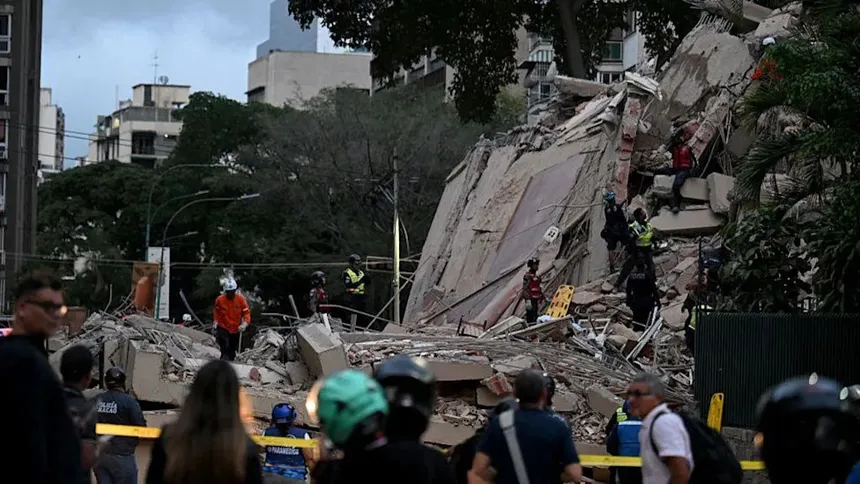

Back-to-back tremors spark panic across urban areas as rescue teams deploy to assess structural collapse and infrastructure damage.
DUBAI: A powerful double-strike earthquake rocked parts of Venezuela on Thursday, June 25, 2026, causing widespread panic and significant structural damage. Multiple buildings have reportedly collapsed or suffered critical structural failure across affected urban zones, prompting emergency services to initiate immediate search and rescue operations.
The dual seismic events struck within a short interval of each other, magnifying the impact on local infrastructure. Tremors were felt intensely in major residential centers, causing thousands of terrified citizens to flee their homes and offices into the safety of open streets. Preliminary reports indicate that older residential structures and commercial complexes suffered the brunt of the shockwaves, with concrete facades crumbling onto roads.

Civil defense forces and emergency rescue squads have been dispatched to the worst-hit neighborhoods to check for trapped residents and clear debris. Authorities are currently focusing their efforts on assessing the structural integrity of vital infrastructure, including bridges, highways, and medical facilities, while setting up temporary emergency shelters.


Local utility networks suffered sudden disruptions following the quakes. Parts of the capital and surrounding provinces reported immediate electricity blackouts, localized water shortages, and unstable telecommunication networks. Emergency response teams are working around the clock to restore essential services amid warnings of potential aftershocks.

Government officials have urged the public to remain calm but vigilant. Residents are being advised to avoid entering damaged buildings until specialized engineers can clear them as safe. No official casualties have been confirmed yet as regional commands compile data from the field.
Venezuela sits on a complex tectonic boundary, primarily interacting with the Caribbean and South American plates, making its northern and coastal regions highly susceptible to seismic activity. Historical events, such as the devastating 1967 Caracas earthquake and the more recent 2018 tremor, underscore the region’s vulnerability. Modern structural updates have mitigated some impact, but older urban sectors remain highly vulnerable to sudden, sequential seismic shocks.