

Tensions escalate as US imposes fresh sanctions and Israel strikes Lebanon; Global markets brace for economic fallout over Strait of Hormuz blockade.
WASHINGTON D.C. / DUBAI — A fragile weeks-long ceasefire in the Middle East faced its most significant test on Friday as US President Donald Trump officially rejected a new peace proposal from Tehran. The announcement came amidst a backdrop of renewed violence, as the Lebanese health ministry reported at least six fatalities from Israeli strikes in southern Lebanon—a move that underscores the volatility of the current truce.

“At this moment, I’m not satisfied with what they’re offering,” President Trump told reporters on Friday, referring to a proposal delivered via Pakistani mediators on Thursday. While the White House declined to disclose the specific text of the Iranian offer, Deputy Press Secretary Anna Kelly reaffirmed the administration’s “clear” stance: Iran must never possess a nuclear weapon.
Sanctions and the ‘Hormuz Toll’
As diplomatic channels showed signs of strain, the US Treasury Department intensified its economic offensive, imposing fresh sanctions on three Iranian foreign currency exchange firms labeled as Tehran’s “financial lifelines.”


In a stern warning to the global shipping industry, Washington also cautioned against paying “tolls” to the Iranian government for safe passage through the Strait of Hormuz. The strategic waterway has been virtually blocked by Tehran since late February following US-Israeli strikes, a move that has choked nearly a fifth of the world’s oil and gas supply.
Economic Shockwaves and Oil Volatility
The uncertainty surrounding the peace talks sent oil markets into a tailspin. West Texas Intermediate (WTI) plummeted by 5%, trading near $99.85, while Brent North Sea crude dropped over 3% to settle at $106.98.

UN Secretary-General Antonio Guterres issued a dire warning, stating that the world faces the “spectre of a global recession” if the Strait is not reopened. “My message is clear: Open the Strait. Let the global economy breathe again,” Guterres said, noting that even an immediate reopening would leave supply chains reeling for months.
Military Posturing and Internal Rifts
While the USS Gerald R. Ford aircraft carrier has reportedly left the Middle East after 10 months at sea, twenty US Navy ships—including two other carriers—remain in the region. Reports suggest Trump has been briefed by CENTCOM on “short and powerful” strike scenarios should the ceasefire reach a permanent stalemate, including plans to forcibly retake the Strait of Hormuz.
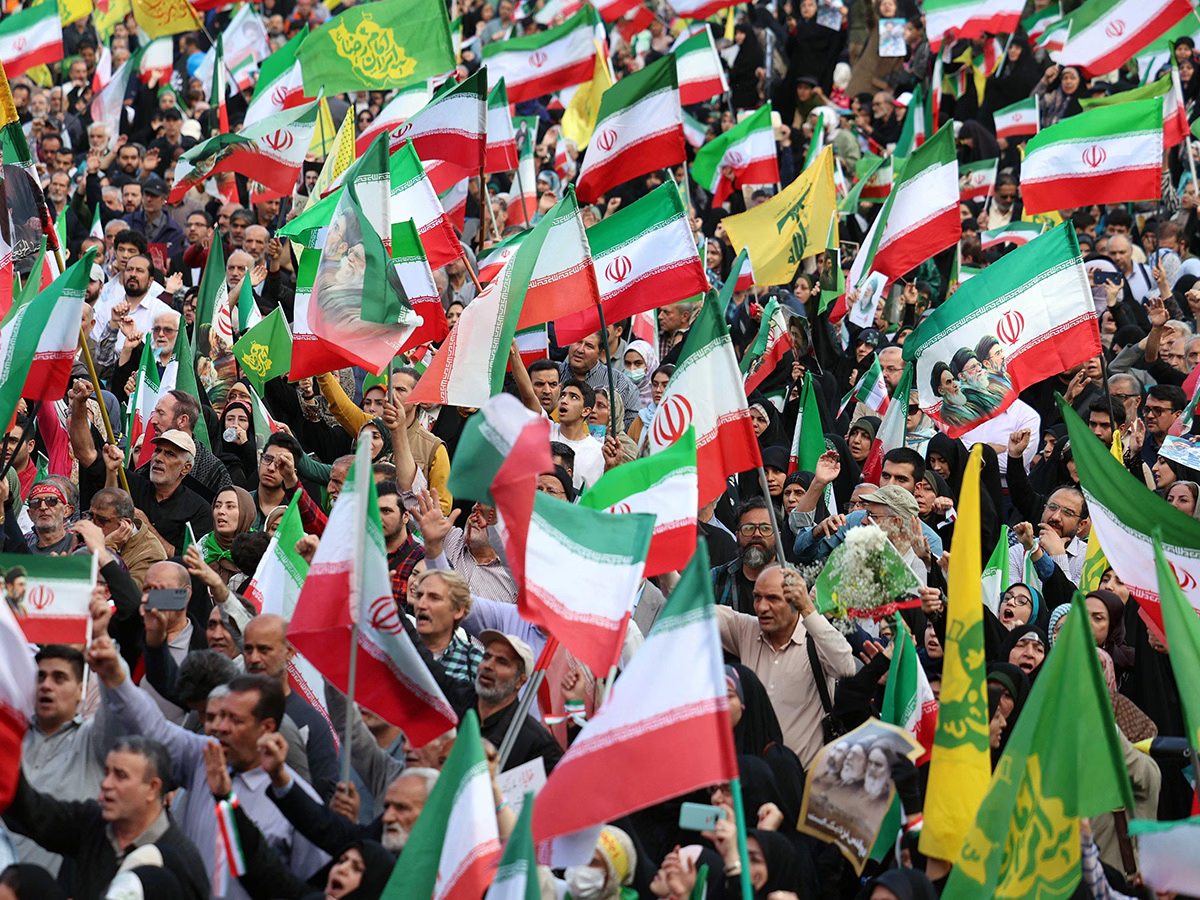
In Tehran, the political landscape appears equally fractured. Reports indicate an internal split between President Masoud Pezeshkian and the Revolutionary Guard, with rumors swirling regarding the removal of Foreign Minister Abbas Araghchi for allegedly bypassing the presidency.
A Crossroads for Diplomacy
The Trump administration currently maintains that the 1973 War Powers Resolution deadline—which would typically require Congressional approval for military action by this Friday—is no longer applicable, arguing the war “effectively ended” with the April ceasefire.
However, with Iran stepping up efforts to recover buried missiles and the UAE calling for international accountability for “unlawful interference” in maritime navigation, the path to a lasting peace remains fraught with peril. For now, the global gaze shifts to President Trump’s scheduled visit to Beijing in mid-May, a trip expected to be a pivotal factor in the administration’s final Iran strategy.