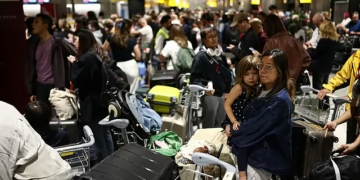



Dubai Civil Aviation Authority mandates clear communication and assistance for delays, cancellations, and disruptions.
Dubai: In a significant move to bolster passenger protection, the Dubai Civil Aviation Authority (DCAA) has officially launched the Aviation Consumer Welfare Directive. Effective from April 28, 2026, this comprehensive framework establishes clear-cut rights for travelers and sets strict responsibilities for airlines and travel agents operating within the emirate.

The directive applies to all Dubai-based national carriers, their subsidiaries, code-share partners, and foreign airlines operating out of Dubai’s airports, as well as licensed travel agents. The move ensures that whether you are a resident or a transit passenger at Dubai International (DXB), you are legally protected against service failures.

Transparency at the Point of Purchase
Under the new rules, airlines are now mandated to provide absolute transparency during the booking process. This includes disclosing the total ticket price—inclusive of all taxes, surcharges, and fees—upfront. Furthermore, carriers must clearly communicate baggage allowances, fare restrictions, and specific penalties for changes or cancellations before a passenger completes a transaction.


Rights During Flight Delays and Cancellations
The directive provides a safety net for passengers facing travel disruptions. If a flight is delayed or cancelled, airlines are legally required to offer proactive communication regarding the cause and duration of the delay. Passengers must be given the choice between:
- Re-booking: The next available flight on the same airline.
- Re-routing: Travel via another airline, provided commercial agreements are in place.
- Refunds: A full refund or a voucher for the unused portion of the ticket.
For delays exceeding three to eight hours, the airline is obligated to provide “duty of care” assistance, which includes food, refreshments, and, where necessary, hotel accommodation and transport.
Protections Against ‘Force Majeure’
While airlines are not required to pay financial compensation for disruptions caused by factors beyond their control—such as severe weather, natural disasters, or pandemics—they are still bound by a “duty of assistance.” This support, which includes arranging alternative travel and basic care, is capped at 72 hours, though the DCAA reserves the right to extend this in exceptional cases.
Priority for Vulnerable Passengers
The DCAA has emphasized non-discrimination, requiring airlines to provide priority assistance to People of Determination, elderly passengers, and unaccompanied minors during any travel disruption.
This directive marks a qualitative shift in Dubai’s aviation sector, aligning the city with international best practices and ensuring that the millions of passengers passing through its hubs every year are treated with fairness and transparency.