

ABU DHABI/NEW DELHI – The Middle East has been thrust back into a state of high alert following a significant escalation in hostilities between Iran and regional powers. On Tuesday, May 5, 2026, the United Arab Emirates (UAE) successfully intercepted a wave of Iranian ballistic missiles, cruise missiles, and drones, prompting a swift global condemnation and a massive economic contingency response from India.
The UAE Ministry of Defence confirmed that its air defense systems were activated across the country to neutralize the aerial threats. While all incoming projectiles were intercepted, debris caused a fire in Fujairah, resulting in injuries to three Indian nationals. In response to the security situation, the UAE Ministry of Education has transitioned all schools and nurseries to nationwide distance learning through the remainder of the week.
India’s $27 Billion Economic Shield
Recognizing the severe risk to global supply chains and domestic stability, the Indian government, led by Prime Minister Narendra Modi, has approved a staggering $27.3 billion (approx. ₹2.25 lakh crore) credit guarantee scheme.


This emergency fund is specifically designed to help Indian businesses—particularly the aviation sector—navigate the “short-term cash problems” triggered by surging fuel prices and maritime disruptions. The credit line will be available for five years for general businesses and seven years for airlines to prevent layoffs and ensure the resilience of the Indian economic ecosystem until March 2027.
“Project Freedom” and the Hormuz Standoff
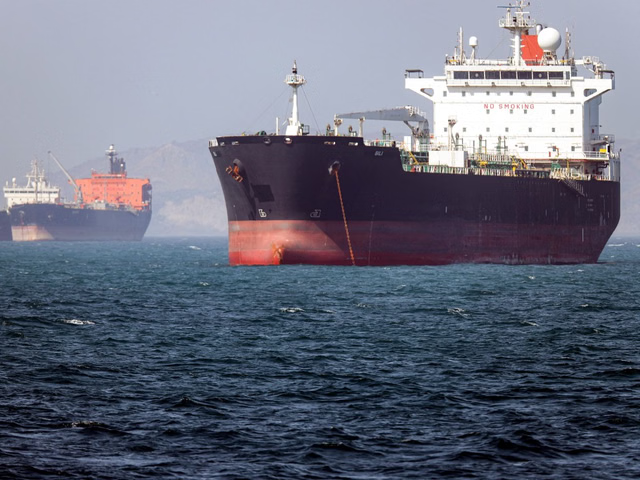
The escalation follows the launch of “Project Freedom” by US President Donald Trump, a military operation involving over 100 aircraft and 15,000 service members aimed at escorting commercial vessels through the blockaded Strait of Hormuz.

- US Stance: Pentagon Chief Pete Hegseth warned that while the US is “not looking for a fight,” any attack on shipping will be met with “devastating firepower.”
- Iranian Warning: Tehran has labeled the US naval escort a violation of the existing ceasefire. Iranian Foreign Minister Seyed Abbas Araghchi cautioned that “Project Freedom is Project Deadlock,” asserting there is no military solution to the crisis.
Global Condemnation and Solidarity
The international community has rallied behind the UAE, with leaders from Saudi Arabia, Qatar, Bahrain, Egypt, France, and Canada condemning Iran’s “unprovoked” and “terrorist” attacks on civilian infrastructure.
“These positions affirm that Iran is the aggressor party, responsible for exacerbating the crisis in the Arabian Gulf,” stated UAE Presidential Adviser Dr. Anwar Gargash.
Market Volatility and Shipping Disruptions
The conflict has sent shockwaves through global markets:
- Oil Prices: Brent crude surged by 5.8% to $114.44 a barrel.
- Maritime Impact: A South Korean cargo vessel, the HMM Namu, caught fire in the Strait of Hormuz following an explosion, though all 24 crew members were reported safe.
- Aviation: Global airlines are facing immediate operational hurdles due to the closure of key corridors and spiraling insurance costs.
As diplomatic efforts led by Pakistan and France continue, the region remains on a knife-edge. The “double blockade”—where Iran is prevented from exporting oil and in turn threatens to choke the world’s most vital energy artery—presents the most significant threat to global stability in recent years.