

Voters shatter traditional party loyalty to deliver a stinging blow to LDF’s “authoritarianism” and BJP’s communal rhetoric.
THIRUVANANTHAPURAM – In a political upheaval of unprecedented proportions, the voters of Kerala have delivered a resounding mandate in the 2026 Assembly Elections, effectively dismantling the Left Democratic Front’s (LDF) long-standing dominance. Breaking through decades of rigid religious, caste, and party affiliations, the electorate has handed the United Democratic Front (UDF) a landslide victory, capturing 102 seats and leaving the mighty CPM in a state of existential crisis.
The CPM, which held 63 seats following its 2021 triumph, saw its tally plummet to a mere 26—its worst performance since 2001. The LDF coalition, which previously boasted a towering 99 seats, has now shrunk to a paltry 35. Conversely, the Congress party emerged as the dominant force, securing 63 seats, while its key ally, the Muslim League, won 22 of the 27 seats it contested.

An ‘Inside Job’: The Rebellion of the Party Cadre
Political analysts describe this defeat as a “retributive rage” fueled by two major disruptions: an internal rebellion within the CPM and a collective mass awakening across the state. Ordinary CPM workers, disillusioned by what they perceived as authoritarianism, nepotism, and corruption, appeared to lead a “life-saving act” to discipline their own leadership.



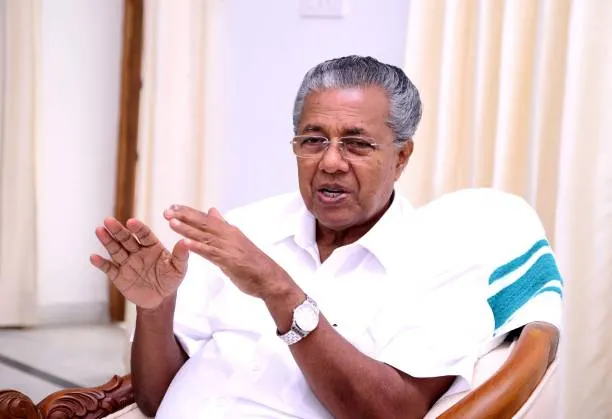
Even the most impregnable CPM fortresses were breached. Forts like Taliparamba, Payyannur, and Thrikkarippur—which remained safe even during the 2001 landslide—fell to the UDF with ease. Perhaps most humbling was the performance in Dharmadam, where Chief Minister Pinarayi Vijayan saw his 2021 winning margin of over 50,000 votes slashed to 19,247 by Congress novice V.P. Abdul Rasheed.
The decline was evident even in the seats the CPM managed to retain. In Manalur, the winning margin dropped from nearly 30,000 to a razor-thin 126 votes.
Hubris and the ‘Rebel’ Masterstroke
The seeds of the CPM’s downfall were sown during the candidate selection process. The party’s decision to field T.I. Madhusoodanan in Payyannur, despite allegations regarding a martyr fund, and the snubbing of whistleblowers like V. Kunhikrishnan, sparked local revolts.
The UDF executed a strategic masterstroke by stepping back and supporting disgruntled CPM veterans and rebels as independents. This allowed the internal resentment of the Left to channel directly into the ballot box, with high-profile figures like G. Sudhakaran and Aisha Potty either departing or distancing themselves from the party fold.
The ‘Kerala Story’ of Secular Unity
The 2026 election also marked a firm rejection of communal politics. Despite a campaign heavy on “Love Jihad” rhetoric and communal polarization from the BJP, the party failed to increase its vote share, which remained stagnant at approximately 11.4%.
While the BJP secured three seats, its attempt to manipulate the secular fabric of the state—specifically through communal messaging in Guruvayur—backfired. Voters responded with a “fence-breaking” ritual, where Hindus, Christians, and Muslims voted in unison to protect the state’s secular identity. This was highlighted in Kochi, where a Muslim candidate won a traditionally Christian seat, and in Thavanur, where a Christian candidate emerged victorious in a Muslim-majority segment.
Conclusion
As the dust settles, the political map of Kerala has been redrawn. The 2026 verdict is not merely a change in government but a stern warning from an electorate that refused to be taken for granted. For the CPM, the path forward requires deep introspection, while for the UDF, the massive mandate brings the heavy responsibility of fulfilling the hopes of a reformed Kerala.