


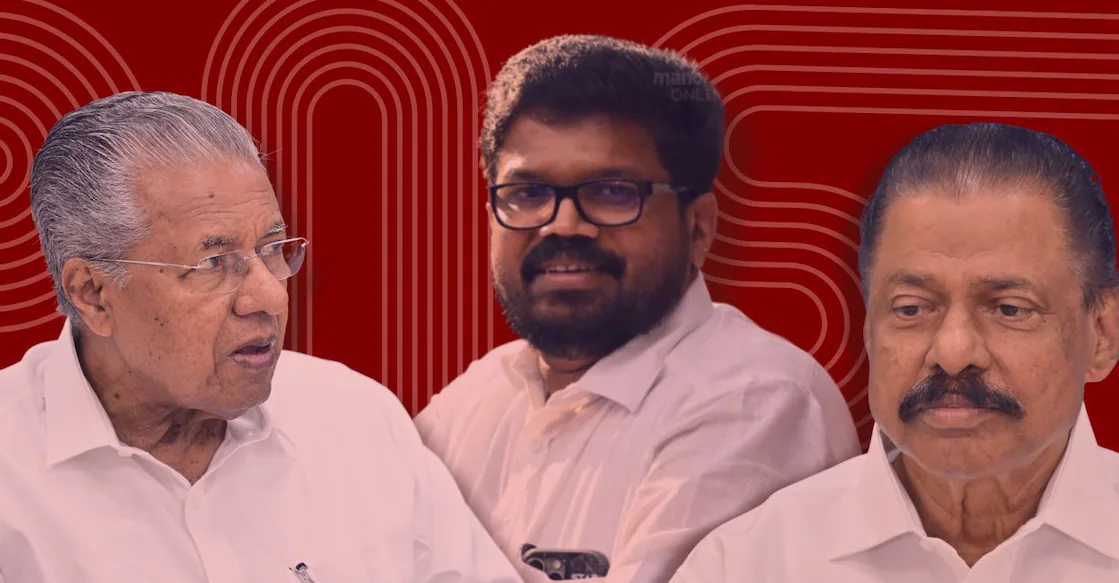
Groundswell of dissent hits Kerala’s ruling party leadership as local leaders blame Chief Minister Pinarayi Vijayan’s ‘combative style’ for recent electoral disasters.
KANNUR: In an unprecedented show of internal defiance, the Communist Party of India (Marxist) is facing a severe internal crisis in its traditional stronghold of Kannur. Following a scathing assessment by the district secretariat, the two-day CPM district committee meeting concluded on Saturday with members launching a direct assault on the state leadership. Leaders openly alleged a calculated conspiracy to politically isolate party strongman P Jayarajan and former Health Minister K K Shailaja, while fiercely criticizing Chief Minister Pinarayi Vijayan and State Secretary M V Govindan for the party’s recent electoral rout.
The back-to-back high-level meetings in Kannur have exposed deep fractures within the party structure. Insiders reveal that the discussions witnessed the most intense and direct criticism of the top leadership ever recorded in the district. Rather than attributing the poll losses to standard anti-incumbency or governance failures, committee members firmly placed the blame on the public resentment generated by the arrogant and abrasive leadership styles of Vijayan and Govindan.
The Targeted Sidelining of Veterans
A major flashpoint during Saturday’s session was the alleged deliberate isolation of state committee member P Jayarajan. Following the party’s electoral setbacks, a massive wave of support has emerged for Jayarajan both online and offline, with party sympathizers increasingly projecting him as the ideal successor to M V Govindan. District committee members alleged that the top brass, threatened by his grassroots popularity, has been actively working to sideline him.


Similarly, the leadership faced heat over its candidate selection strategies, specifically regarding Politburo member K K Shailaja. Members argued that fielding Shailaja in the Peravoor constituency—a traditional stronghold of Congress state president Sunny Joseph, who has held the seat for three consecutive terms—was a calculated move designed to engineer her political defeat and diminish her standing within the party.

Local Leadership Under Fire Over Rebel Factor
Kannur District Secretary K K Ragesh found himself at the receiving end of severe criticism. Members pointed out humiliating defeats in key regions, including the loss of Munderi panchayat, which happens to be Ragesh’s home turf. The leadership was also accused of quietly backing or failing to contain rebel candidates who sabotaged official party nominees.
The inner-party friction escalated over the defeat of P K Shyamala, wife of M V Govindan, who lost to rebel candidate T K Govindan in Taliparamba. While Ragesh reportedly attempted to downplay the loss by claiming Taliparamba was no longer a Left bastion, committee members fiercely countered the narrative. They revealed that despite names like N Sukanya being discussed, the local leadership pushed forward a single-name panel featuring only Shyamala, ignoring warnings that not a single lower-level party unit backed her candidature.

A Warning from History: “The party crashed from a nearly 50,000-vote victory margin to a crushing defeat of over 7,000 votes in Payyannur. How did the Left lose nearly 30,000 votes in its own fortress? We must look at West Bengal as a stark reminder of what happens when leadership refuses to correct its political mistakes.” — An anonymous CPM District Committee Member during the session
The Pinarayi Factor and Vote Leakage
The committee systematically dismantled the campaign strategy led by the Chief Minister. Specific instances of Vijayan’s combative handling of the media and his controversial campaign rhetoric—such as his infamous remark telling a supporter to “go home and ask”—were cited as key factors that alienated regular voters. The depth of the crisis was highlighted by members noting the palpable anxiety within the party when Pinarayi Vijayan initially trailed for the first six rounds of counting in his own constituency of Dharmadam.
Demands have now been raised for a comprehensive, constituency-wise probe into the massive leakage of votes in traditional CPM bastions, including Mattannur, Kalliasseri, and Azhikode. As the global Malayali diaspora watches closely, the political tremor in Kannur signals that the CPM can no longer afford to ignore the growing disconnect between its top leadership and its grassroots cadre.