

As traditional destinations tighten residency rules, students from the Gulf prioritize long-term migration pathways and career security over university rankings.
ABU DHABI – Germany, France, Canada, and Australia have emerged as the premier destinations for UAE-based students seeking international higher education. This shift comes as academic choices are increasingly driven by robust post-study work pathways and long-term settlement opportunities rather than institutional prestige alone.

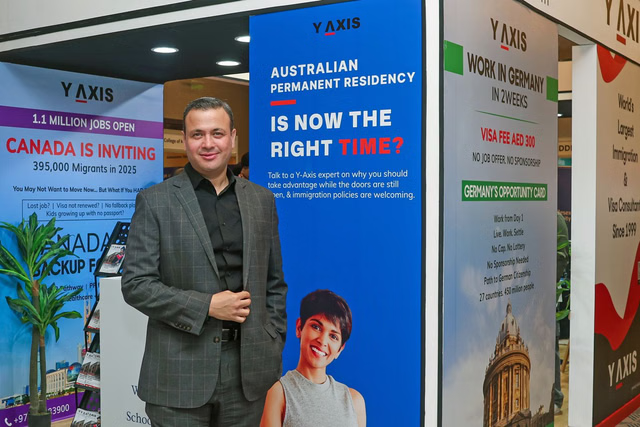
Speaking on the sidelines of the Gulf News Edufair in Abu Dhabi, Clint Khan, Director of immigration and study consultancy Y-Axis, noted a significant evolution in student and parental mindsets. While academic focus remains sharp, the overarching priority has pivoted toward securing a definitive geopolitical and professional “Plan B.”

The Evolution of Student Priorities
According to Khan, contemporary applicants exhibit unprecedented clarity regarding their chosen fields of study. However, the evaluation metrics for international universities have fundamentally changed. The traditional trajectory of simply obtaining an overseas degree and subsequently seeking employment has been replaced by a strategic demand for clear pathways to permanent residency and citizenship.


“Earlier, students mainly focused on where they could study, get a job, and settle down later,” Khan observed. “Now, they are looking for a backup, a sense of security… They want to know that the investment they make in their education can eventually help them settle down in that particular country.”
Tightening Rules in Traditional Hubs Restructure Demand
This realignment is largely a response to the escalating regulatory hurdles in traditional educational strongholds like the United States and the United Kingdom. While both nations remain academically prestigious, their restrictive post-graduation immigration frameworks are causing widespread hesitation among international families.
- The United States: Graduates faces the formidable challenge of securing employer-sponsored $H-1B$ visa nominations, a lottery-based system that offers no guarantees of retention.
- The United Kingdom: Despite offering an initial post-study work visa, long-term retention remains strictly contingent upon securing elusive corporate sponsorship under tightening migration caps.
Faced with the financial risk of being forced to repatriation after substantial monetary investments, Gulf-based students are actively diversifying their targets. Consequently, European nations—most notably Germany and France—are experiencing a surge in inquiries due to their accessible structural frameworks. Concurrently, Canada and Australia maintain robust popularity, sustained by their transparent, points-based permanent residency systems.
Aligning Academics with Future Labor Markets
Beyond geographic selection, experts urge students to align their academic pursuits with macro-economic trends and tech-driven industrial transformations.
As artificial intelligence, advanced engineering, and deep technology continue to reshape global corporate landscapes, selecting a destination must involve analyzing long-term national skill shortages. Prospective students are advised to target countries exhibiting high domestic demand for skilled tech and engineering professionals, ensuring that their academic investments seamlessly translate into secure, non-speculative international careers.