


Major airlines extend flight suspensions to Tel Aviv until 2027 as diplomatic efforts falter and regional security fears intensify across the Gulf.
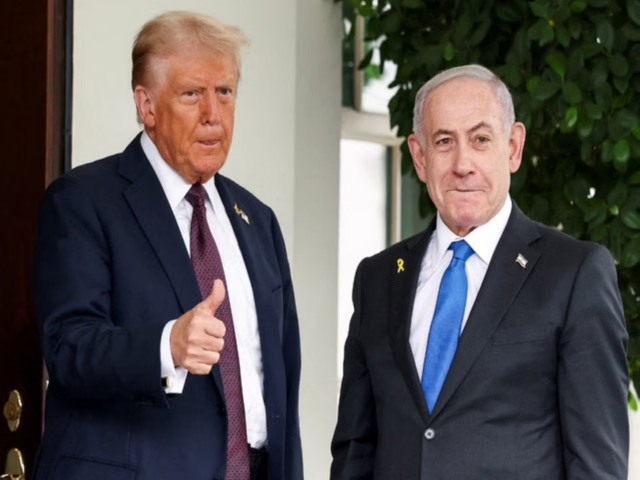
DUBAI: Tensions in the Middle East have escalated to a critical flashpoint following a high-stakes telephone conversation between US President Donald Trump and Israeli Prime Minister Benjamin Netanyahu. The discussion, which focused heavily on the conflict with Iran, has intensified fears that the fragile, mediated ceasefire could collapse, pushing the region back into an active and more volatile phase of warfare.

Shortly after the call, President Trump issued an ultimatum to Tehran via his social media platform, Truth Social.
“For Iran, the Clock is Ticking, and they better get moving, FAST, or there won’t be anything left of them. TIME IS OF THE ESSENCE!” Trump wrote.
Highly placed sources, including an Israeli military official, confirmed that Washington and Tel Aviv are actively coordinating potential military contingencies should diplomatic efforts fail completely. Addressing his Cabinet on Sunday, Prime Minister Netanyahu stated firmly that Israel remains “prepared for any scenario” regarding Iran.



Stalled Diplomacy and the Threat of Escalation
The sharp shift in rhetoric comes at a time when indirect mediation efforts, spearheaded by regional intermediaries, are struggling to find common ground. Qatari Prime Minister Mohammed bin Abdulrahman Al Thani recently held high-level talks with Pakistani Prime Minister Shehbaz Sharif to discuss Pakistan’s active diplomatic mediation aimed at preventing a broader regional conflagration.
Despite these backdoor channels, Washington and Tehran remain deeply divided over the terms of a permanent settlement. While Trump indicated that he still expects Iran to present an updated, more acceptable counter-proposal in the coming days, his administration has drawn a strict line.
“We want to make a deal, but the Iranians are not at the place we want them to be right now,” Trump reportedly noted, warning that a failure to comply would result in a military response “harder than anything we’ve done to them so far.”
Meanwhile, domestic signals from Iran suggest the Islamic Republic is bracing for an escalation. Iranian state television recently broadcasted footage of news presenters undergoing firearms training from the Islamic Revolutionary Guard Corps (IRGC), with anchors publicizing their readiness to defend the nation—a move analysts view as public mobilization for a potential return to open hostilities.
Aviation Sector Reacts to Regional Instability
The aviation sector has responded swiftly to the heightened threat matrix. Citing protracted instability linked directly to the Iran conflict, American Airlines announced it is extending its suspension of nonstop flights between New York and Tel Aviv until January 6, 2027.
The move follows previous suspensions that were set to run through September of this year. Major US carriers, including United Airlines and Delta, have similarly halted their operations to Israel for extended periods. This leaves domestic Israeli carriers El Al and Arkia as the sole operators maintaining direct commercial air corridors between Israel and the United States, severely impacting international transit.
Gulf Security Concerns Intensify
The economic and security ramifications of the standoff are reverberating across the wider Gulf region. The latest escalation follows a concerning drone strike incident reported near the UAE’s Barakah Nuclear Power Plant on Sunday, alongside renewed, explicit threats targeting commercial shipping and energy infrastructure within the strategic choke point of the Strait of Hormuz.
With formal diplomacy at a standstill and front-line military preparations visibly gaining momentum on both sides, international observers fear that the Middle East may be on the verge of entering an unpredictable and highly dangerous dimension of geopolitical conflict.