


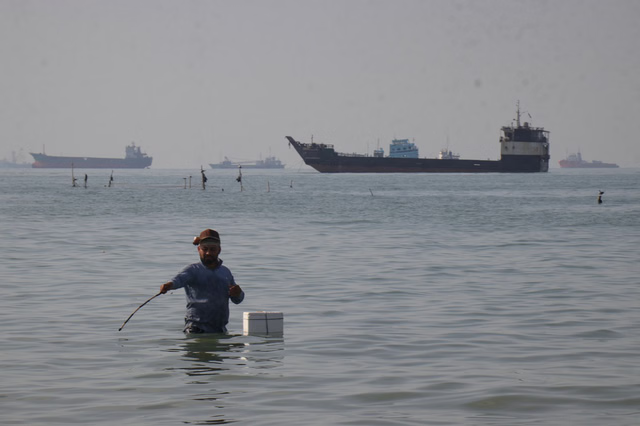
Tehran’s latest diplomatic overture seeks to reopen the Strait of Hormuz and secure a permanent ceasefire within 30 days, while deferring nuclear enrichment disputes to later stages.
DUBAI – Iran has submitted a comprehensive three-stage proposal to the United States aimed at transforming the current fragile ceasefire into a permanent end to the war within a month. The plan, reportedly delivered through Pakistani mediators, seeks a phased de-escalation that prioritizes the reopening of the Strait of Hormuz and the lifting of naval blockades before addressing the deeply contentious issue of Tehran’s nuclear program.
While the proposal represents a significant diplomatic push from Tehran, Washington has signaled immediate reservations. President Donald Trump, while acknowledging the receipt of the plan, expressed skepticism during recent briefings, suggesting that Iran has “not yet paid a big enough price” and reiterating that military options remain on the table should the deadlock continue.
The Three-Stage Framework
According to details obtained by regional monitors, the Iranian proposal is structured to build trust through immediate economic and security concessions:



- Phase 1: Immediate De-escalation (The 30-Day Goal)The primary focus is a permanent ceasefire and a mutual non-aggression pledge involving all regional actors, including Israel. In this stage, Iran offers a gradual reopening of the Strait of Hormuz—a critical artery for 20% of the world’s oil and gas—in exchange for the phased lifting of the U.S. naval blockade on Iranian ports. Tehran has also offered to take responsibility for clearing sea mines in the waterway.
- Phase 2: Nuclear Limits and ConditionsThe second stage addresses uranium enrichment. Reports suggest Iran is proposing a return to a 3.6% enrichment limit under a “zero-storage principle,” provided the U.S. and Israel refrain from further strikes on Iranian infrastructure. Crucially, the proposal rejects the dismantling of existing nuclear facilities.
- Phase 3: Regional Security and Sanctions ReliefThe final phase envisions a broad strategic dialogue between Iran and its Arab neighbors to establish a collective security system in the Middle East, paired with the full release of frozen Iranian assets and the total lifting of economic sanctions.
The Washington Deadlock
The fundamental hurdle remains the sequence of events. The Trump administration has consistently demanded that any final settlement must begin with “affirmative commitments” and strict, long-term limits on Iran’s nuclear capabilities. Washington’s “red line” includes a permanent halt to high-level enrichment and intrusive international monitoring—concessions Tehran wishes to push to the final stages of negotiation.
Furthermore, U.S. officials have expressed concern over the “zero-storage” enrichment proposal, seeking instead the total removal or destruction of enriched uranium stockpiles.

Global Economic Stakes
The urgency of the talks is underscored by the severe disruption to global energy markets. The two-month-old conflict and the subsequent blockade of the Strait of Hormuz have sent fuel prices soaring worldwide. While the U.S. and Israel halted major bombing campaigns four weeks ago, the “war of attrition” at sea continues to strain the global economy, placing immense pressure on both sides to find a breakthrough before the upcoming U.S. midterm elections.
For now, the Middle East remains in a state of “armed peace,” with the world watching to see if Pakistan-mediated diplomacy can bridge the widening chasm between Tehran’s security-first approach and Washington’s nuclear-first demands.