

Diplomatic adviser cautions Tehran against overestimating its hand; reveals UAE was targeted by 3,300 missiles and drones in opening phase of conflict.
ABU DHABI — The United Arab Emirates has issued a sober assessment of ongoing backchannel diplomacy between Washington and Tehran, stating there is only a “50/50 chance” of the United States and Iran securing an agreement to reopen the strategic Strait of Hormuz.
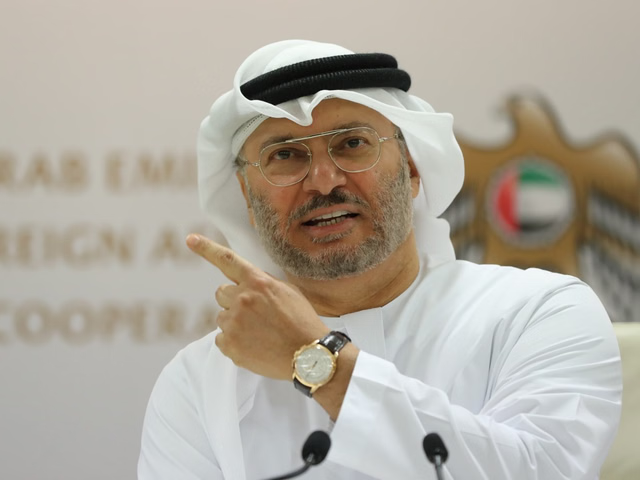
Dr. Anwar Gargash, Diplomatic Adviser to the UAE President, delivered the caution on Friday during the GLOBSEC Forum in Prague. While a fragile ceasefire holds and Pakistan-led mediation attempts to bridge differences, Dr. Gargash warned that a second round of armed hostilities would profoundly destabilise the Gulf and trigger severe economic complications worldwide.
Warning Against Irreconcilable Ceasefires
Addressing the stop-start negotiations, Dr. Gargash urged Iranian officials to approach the current diplomatic window realistically, noting that Tehran has a historical tendency to miscalculate its leverage.



“Iranian officials have missed a lot of chances over the years because there’s a tendency to overestimate their cards,” Dr. Gargash stated. “I hope they don’t do that this time because the region does need a political solution. Round two of a military confrontation will only complicate things.”
The UAE has made its position clear to international mediators: any agreement that merely stops active fighting without correcting foundational grievances is insufficient. Abu Dhabi is strongly opposing any settlement that leaves the Strait of Hormuz—the transit route for a fifth of global oil supplies—under restricted or altered management.
| Key Maritime Corridor Metrics | Impact & Status |
| Global Energy Volume | Typically routes 20% of global petroleum and LNG supplies |
| Current Operational State | “Effectively closed” or heavily restricted since hostilities began |
| UAE Strategic Objective | Absolute return to previous status as an open international waterway |
Nuclear Ambitions Move to ‘Top Strategic Concern’
The conflict has fundamentally altered Abu Dhabi’s threat perception. Dr. Gargash disclosed that the Iranian nuclear program, previously viewed by the UAE as a secondary regional issue, has now escalated to the nation’s primary security challenge.
“The Iranian nuclear programme used to be our second or third concern. Today it is our first concern,” he stated, adding that recent regional escalations have proven that Tehran is willing to utilize any conventional or asymmetrical hardware in its arsenal.

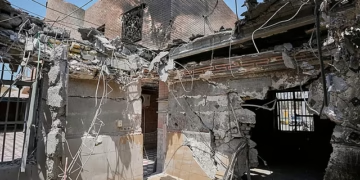
This shifting assessment follows intense direct impacts on the country. The presidential adviser revealed that the oil-rich UAE, which hosts critical US military facilities, was targeted by approximately 3,300 drones and missiles during the initial 40 days of the conflict that erupted on February 28. Advanced Emirati air defence networks successfully intercepted the vast majority of the incoming barrages, with only about four percent breaching security systems to strike infrastructure hubs.
Pressure Mounts on Strategic Waterways
The remarks coincide with sharpening rhetoric from Washington. US Secretary of State Marco Rubio separately rejected reports that Tehran is seeking regional consensus to impose commercial transit fees or a “tolling system” within the Strait of Hormuz to formalise its maritime grip. Rubio stated that no international power should accept restrictions or levies inside recognized international shipping lanes.
With key mediators currently holding continuous high-level consultations in Tehran, Gulf nations including the UAE and Saudi Arabia are maintaining strict pressure on negotiators. The Gulf allies emphasize that a durable peace framework must address the full range of regional threats, ensuring long-term shipping safety and regional energy stability.