


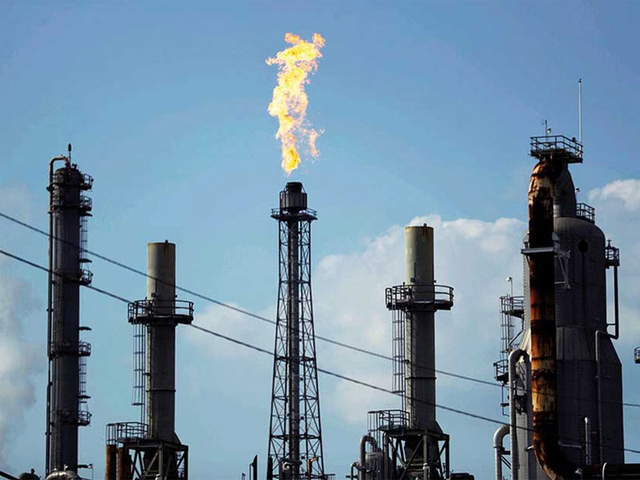
Brent and WTI see sharp reversals following reports of a potential framework agreement to pause Middle East conflict.
DUBAI – Global oil benchmarks retreated significantly on Wednesday, with Brent crude dipping below the psychological $100 mark. The downturn comes as investors pivot from war-risk hedging toward cautious optimism surrounding a potential framework agreement between the United States and Iran aimed at de-escalating tensions in the Middle East.
By late afternoon, Brent crude had fallen by 9.93%, trading at $99.94 a barrel. Simultaneously, West Texas Intermediate (WTI) saw a sharper decline of 10.54%, dropping to $91.73. The reversal offers a temporary reprieve to a global economy that has been grappling with surging energy costs, inflated freight rates, and supply chain disruptions.
Diplomacy Takes Center Stage
The market shift follows reports of a possible “one-page memorandum” between Washington and Tehran. Markets are increasingly pricing in the likelihood that the U.S. administration may seek to avoid a prolonged confrontation to curb domestic inflation and rising transport costs.


Iranian Foreign Minister Abbas Araghchi, currently in Beijing for talks with Chinese officials, stated that Tehran remains open to a “fair and comprehensive agreement.” This diplomatic push, following earlier mediation efforts by Pakistan, has signaled to traders that a path to reopening the Gulf’s vital shipping lanes may be on the horizon.


Konstantinos Chrysikos, Head of CRM at Kudotrade, noted that the decline is a direct reaction to “growing expectations that diplomatic efforts could eventually lead to a broader easing of tensions.” He added that reassuring signals from Washington have significantly improved market sentiment.
The Hormuz Risk Factor
Despite the price drop, analysts warn that the physical supply of oil remains precarious. The Strait of Hormuz—the world’s most critical oil chokepoint—remains a zone of high friction.
Market anxiety cooled slightly after U.S. President Donald Trump halted “Operation Freedom,” a naval initiative launched earlier this week to escort vessels through the Strait. Vijay Valecha, Chief Investment Officer at Century Financial, suggested the pause was intended to give both nations “breathing room” to negotiate.
“The pullback is being driven more by sentiment than by a clear improvement in supply conditions,” Valecha cautioned. “The blockade on Iranian oil exports remains, and ship traffic through the Strait is still constrained.”
Supply Tightness and Inventory Data
While diplomatic headlines dominate the ticker, underlying data suggests a tight physical market. Data from the American Petroleum Institute (API) indicated a massive draw of 8.1 million barrels in U.S. crude inventories last week. If confirmed by the Energy Information Administration (EIA), this would represent the largest supply drop since February, potentially setting a floor for how far prices can fall.
Outlook for Traders
Experts believe the market remains vulnerable to sudden “headline shocks.” Any setback in negotiations or a fresh maritime incident in the Gulf could instantly reverse Wednesday’s gains. Technical analysts point to $100 as a crucial support level for WTI; a sustained break below this could see prices testing the $95 range, while any escalation could quickly push Brent back toward the $110 mark.