


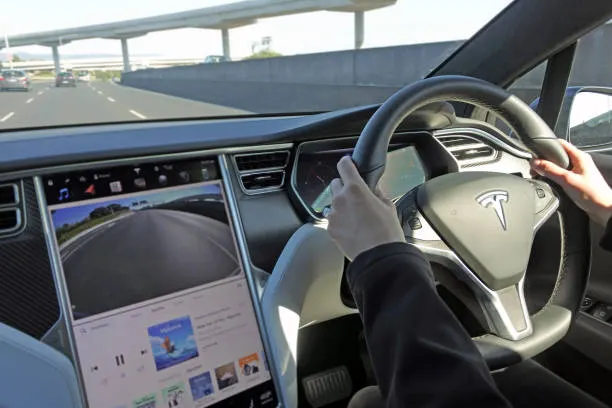

Model Y and Model 3 Secure Top Spots as Chinese Manufacturers Command Market Volume
DUBAI / GLOBAL — The global electric vehicle (EV) landscape witnessed a definitive shift in March 2026, characterized by a dual reality: Tesla’s continued premium dominance and an unprecedented volume surge from Chinese manufacturers. Despite an increasingly crowded field, Tesla’s flagship models—the Model Y and Model 3—retained their positions as the world’s best-selling electric cars, underscoring the enduring power of the American brand’s ecosystem.
According to the latest data from CleanTechnica, the Tesla Model Y crushed its competition with 118,531 units sold in March alone. Its sibling, the Model 3, secured the second spot with 53,158 units. Together, these two models accounted for over 171,000 deliveries, more than doubling the volume of the nearest individual competitor and reinforcing Elon Musk’s strategy of high-value, vertically integrated manufacturing.

The Rise of the “Dragon” Volume
While Tesla holds the crown for individual models, the broader leaderboard reveals a market increasingly defined by Chinese industrial might. Out of the top 20 best-selling EVs globally, 16 models originated from China.


Leading the Chinese charge was the Geely Xingyuan (EX2) with 34,146 units, followed closely by a fleet of BYD models including the Song (Seal U) and the Yuan Up. The data highlights a significant divergence in strategy: while Tesla focuses on a concentrated, premium lineup, Chinese brands like BYD, Geely, and Li Auto are leveraging massive scale and rapid model proliferation to capture every price segment, from budget city cars to luxury SUVs.
Key Market Observations
- Tesla’s Efficiency: The fact that just two Tesla models can outpace the combined volume of several top-tier Chinese competitors speaks to the brand’s superior platform sharing and global loyalty.
- China’s Versatility: The diversity is staggering—ranging from the ultra-affordable Wuling Mini EV (16,815 units) to the luxury NIO ES8 (16,272 units) and the tech-heavy Xiaomi YU7 (13,561 units).
- Emerging Players: Vietnamese automaker VinFast is also making notable strides, with its Limo Green model emerging as its top performer in March, contributing to the growing presence of Southeast Asian players in the global arena.
A Tale of Two Regions
The March 2026 rankings also reflect the impact of international trade policies. Tesla’s strength remains most pronounced in North America and Europe, where trade barriers and tariffs often limit the entry of low-cost Chinese imports. Conversely, in “open” markets across Asia, the Middle East, and Latin America, Chinese brands are rapidly becoming the default choice for consumers seeking affordability and variety.

For global audiences, including the significant Gulf Malayali diaspora heavily invested in tech and automotive trends, this shift signals a future of more competitive pricing and diverse choices. However, for legacy automakers in Japan and Europe, the window to catch up is narrowing. Toyota’s bZ4X managed a respectable 15,683 units, but it remains a distant outlier in a race currently being dictated by Austin and Shenzhen.
As battery costs continue to fall and charging infrastructure matures, the data from March 2026 confirms one thing: the EV revolution is no longer a prospect—it is a global reality moving at breakneck speed.