


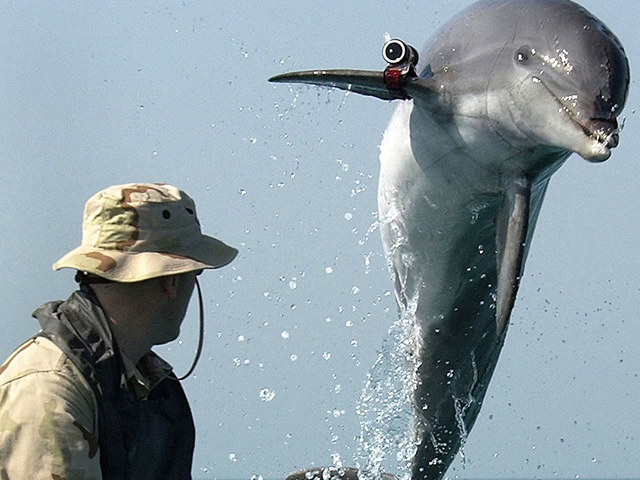
Pentagon clarifies that while marine mammals are used for mine detection, “suicide dolphin” capabilities in Iran are nonexistent.
WASHINGTON – US Defense Secretary Pete Hegseth has officially dismissed speculative reports suggesting that Iran might deploy “kamikaze dolphins” against American naval vessels in the Strait of Hormuz. Speaking at a Pentagon briefing on Tuesday, Hegseth addressed the unusual queries regarding unconventional maritime warfare, providing clarity on the limits of animal-based military programs amidst escalating friction in the Gulf region.
When questioned on whether Tehran possessed the capability to utilize trained marine mammals for offensive strikes or mine placement, Hegseth confirmed that Iran does not hold such assets. While he lightheartedly declined to elaborate on the specifics of current US biological programs, the Defense Secretary was firm in debunking the notion of “suicide dolphins” being a present threat in the strategic waterway.

The Reality of Marine Mammal Programs
The discussion, though sparked by rumors, highlights a legitimate history of military dolphin use. Since the Cold War, the US Navy’s Marine Mammal Program, managed by the Naval Information Warfare Center Pacific, has utilized the biological advantages of bottlenose dolphins and sea lions.


Contrary to the “kamikaze” label, these animals are trained for surveillance and detection, not destruction. Experts emphasize that dolphins possess an organic sonar (echolocation) that remains superior to human technology in specific underwater environments.

- Detection: Dolphins identify underwater mines or intruders using sonar clicks.
- Marking: Upon discovery, they return to handlers and are subsequently deployed to drop marker buoys.
- Neutralization: Human divers or robotic units then move in to safely neutralize the threat.
Historical Precedence and Tactical Utility
The US has previously deployed these assets in the Gulf. During the 2003 Iraq War, dolphins were instrumental in clearing mines around the port of Umm Qasr. Their ability to navigate shallow, cluttered waters where traditional sonar fails makes them invaluable for harbor defense.
While the US currently maintains no active dolphin deployment in the Gulf, the region remains on high alert. Speculation regarding Iran’s capabilities stems from a year 2000 acquisition of Soviet-era military dolphins from Russia. However, intelligence analysts suggest there is no evidence that Tehran has maintained or successfully weaponized an active program.
Tensions in the Strait of Hormuz
The Strait of Hormuz remains a critical global chokepoint for oil and liquefied natural gas (LNG). As Washington and Tehran navigate a fragile security environment, the focus has shifted toward asymmetric warfare—specifically the use of fast boats, drone swarms, and naval mines—rather than biological “kamikaze” units.
The term “kamikaze,” rooted in World War II Japanese suicide missions, has recently surged in digital discourse regarding modern drone technology, leading to the sensationalist, though unfounded, rumors of similar tactics being applied to marine life.